

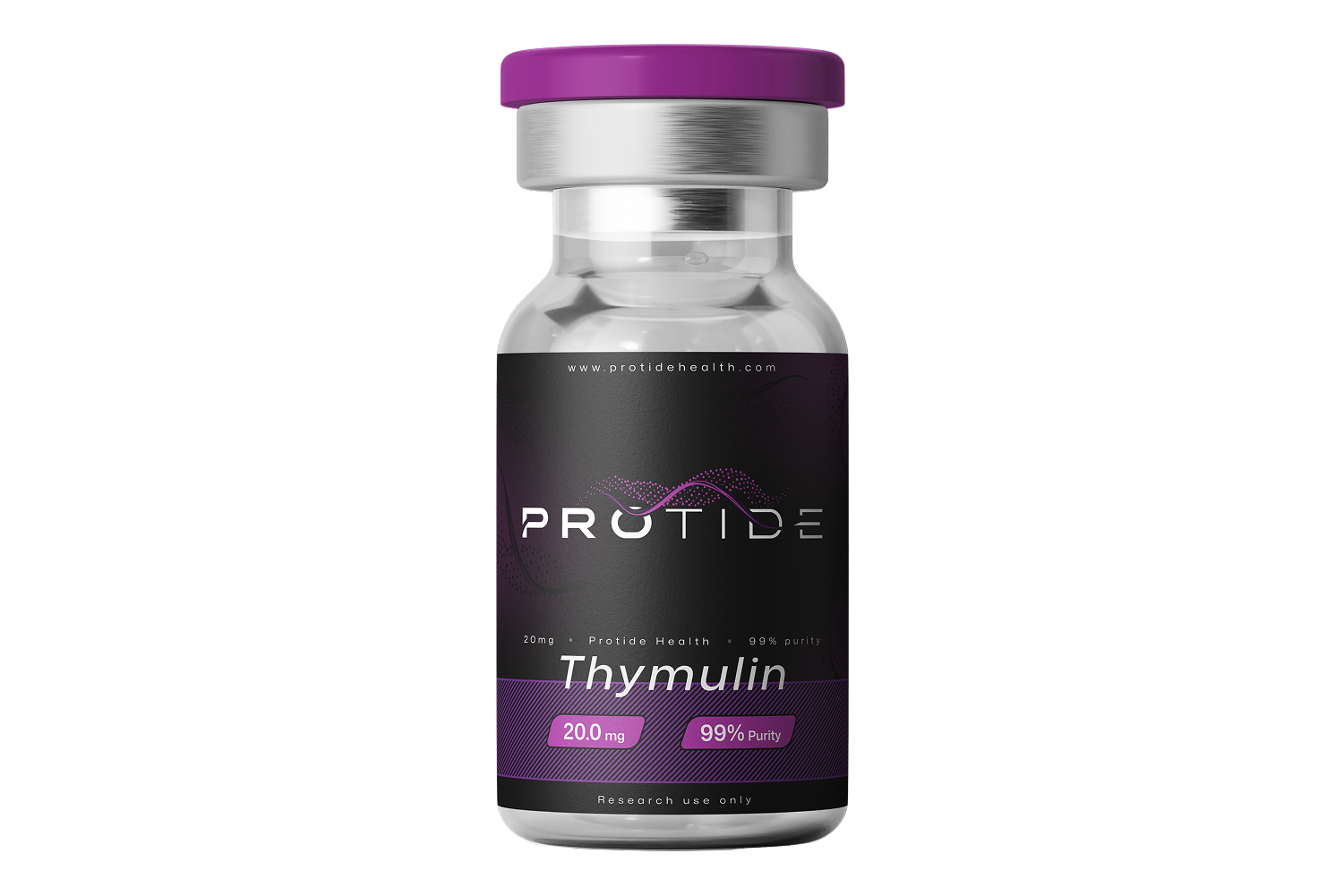
What is Thymulin?
Thymulin is a naturally occurring nonapeptide hormone (nine amino acids) exclusively produced by the epithelial cells of the thymus gland. Its amino acid sequence is pGlu-Ala-Lys-Ser-Gln-Gly-Gly-Ser-Asn, and it requires the presence of zinc in an equimolar ratio to achieve biological activity — making it one of the few known zinc-dependent hormones in the body. Originally discovered in the early 1970s and initially designated “Facteur Thymique Sérique” (FTS, or serum thymic factor), Thymulin was later renamed and has since accumulated over five decades of published research spanning immunology, neuroendocrinology, and inflammation science.
What makes Thymulin particularly interesting to researchers is its dual identity. It was first characterized as a thymic hormone involved in T-cell differentiation and immune regulation. But over the past two decades, a growing body of evidence has revealed a second dimension: potent anti-inflammatory and analgesic properties that extend well beyond the immune system — into the central nervous system, the lungs, and inflammatory pain pathways. Thymulin sits at the intersection of two of the most active areas in modern biology: immune aging (immunosenescence) and neuroinflammation.
Be the first to review “Thymulin 20mg”
Related products
Cellular Longevity Research
Immune Research
Gastrointestinal Research
Immune Research
Cellular Longevity Research
Cellular Longevity Research
Gastrointestinal Research
Gastrointestinal & Immune Research Bundle (Thymosin Alpha-1, KPV, BPC-157)
Dermatological Research
Reviews
There are no reviews yet.