

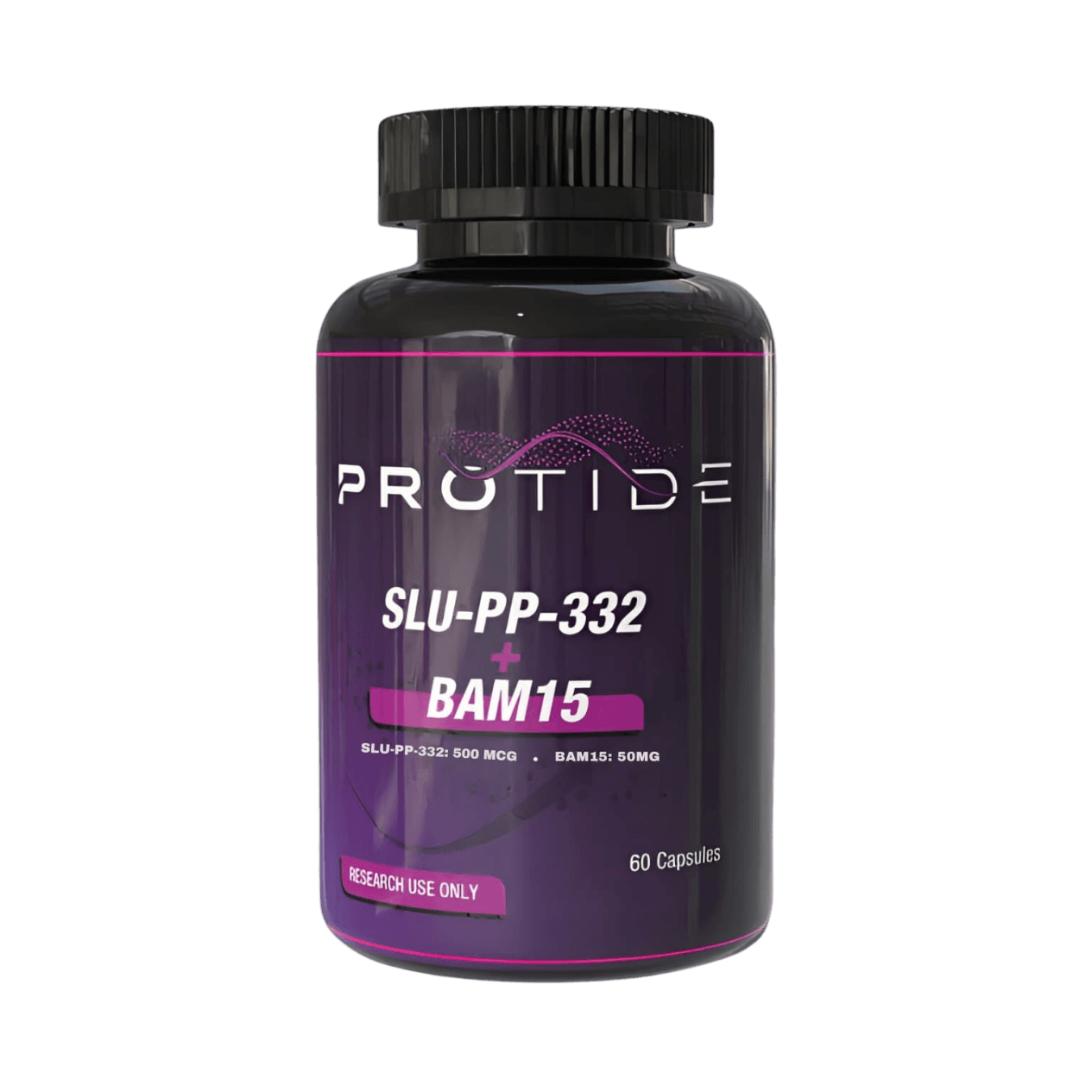
SLU-PP-332 & BAM 15
$199.00
SLU-PP-332 & BAM-15 Research Capsules. SLU-PP-332 and BAM-15 are two distinct yet complementary research compounds. Extensively investigated in preclinical and in-vitro models to observe synergistic mechanisms related to mitochondrial biology, energy expenditure pathways, and cellular metabolism.
Format: 60 Capsules (500mcg SLU-PP-332 and 50mg BAM-15 per capsule)
Notice: This product is strictly for research purposes and is not intended for human consumption or clinical use.
SLU-PP-332 and BAM-15 Research Capsules
SLU-PP-332 and BAM-15 Research Capsules combine two specific small molecules designed strictly for laboratory investigation. Researchers utilize this synthetic formulation in preclinical models to map the synergistic mechanisms related to mitochondrial biology and cellular metabolism. This article reviews current in vitro data regarding this compound combination.
What are the Components of the Combination Capsule?
In vitro studies focus on how these two non-overlapping molecules interact within cellular energy systems. The capsules contain a precisely measured combination of synthetic elements.
Formulation and Cellular Pathways
Available in a format of 60 capsules (500mcg SLU-PP-332 and 50mg BAM-15 per capsule), this compound allows researchers to measure multi-pathway interactions without complex handling protocols.
Preclinical models evaluate:
-
SLU-PP-332: A synthetic pan-ERR agonist that targets nuclear receptors to measure transcription-level changes in mitochondrial biogenesis (PubMed).
-
BAM-15: A selective mitochondrial protonophore that targets the inner mitochondrial membrane, evaluated for its capacity to uncouple electron transport from ATP synthesis (PubMed).
Mechanisms Evaluated in Animal Studies
Current research investigates specific cellular responses associated with the combined pathways of nuclear receptor activation and mitochondrial uncoupling. Animal studies measure how this synthetic formulation influences overall energy expenditure.
The Dual-Mechanism Rationale
Laboratory investigation examines the theory that combining these two mechanisms creates a synergistic effect in subject models. In vitro studies measure the initial cellular changes followed by sustained metabolic adaptations.
Studies investigate:
-
The SLU-PP-332 pathway activating ERRα to build cellular machinery and upregulate fat-burning enzymes.
-
The BAM-15 pathway immediately dissipating stored energy across the mitochondrial gradient.
-
Overlapping interactions involving AMPK and PGC-1α signaling (PubMed).
Preclinical Investigation Areas
Experimental applications focus strictly on measuring biomarkers related to energy expenditure and structural metabolic adaptations. Researchers utilize complex models to track energy homeostasis.
Metabolic Syndrome and Obesity Models
Animal studies evaluate energy regulation in diet-induced obese (DIO) mice and specific genetic variants (ob/ob and db/db models). Researchers measure variables in lipid accumulation and insulin sensitivity (PubMed).
Observations in these models include:
-
Measurements utilizing indirect calorimetry in metabolic cages
-
Downregulation of lipogenesis genes (fat-building enzymes)
-
Morphological remodeling of white adipose tissue in laboratory studies
Safety Profiles in Uncoupler Research
A primary focus of laboratory investigation involves comparing BAM-15 to historical mitochondrial uncouplers like DNP. In vitro studies evaluate the targeted action of BAM-15, noting its stability without raising body temperatures in subject models. Researchers measure various hematological markers to confirm structural safety profiles during testing (PubMed).
Compound Specifications
Researchers analyze these two combined molecules to map their distinct interactions within isolated testing environments.
Frequently Asked Questions (FAQ)
What is the SLU-PP-332 and BAM-15 combination investigated for?
Research examines its interaction with mitochondrial energy pathways in controlled settings. Animal studies measure its combined influence on mitochondrial biogenesis and immediate energy expenditure.
Has this specific combination been published in literature?
While both compounds are thoroughly evaluated independently in preclinical research, as of early 2026, no published literature evaluates this precise combination simultaneously. The formulation enables researchers to explore these dual mechanisms.
Conclusion on SLU-PP-332 and BAM-15 Capsules
In conclusion, SLU-PP-332 and BAM-15 Research Capsules remain a significant focus of laboratory investigation regarding complementary mitochondrial metabolism pathways. Preclinical models continue to examine the interactions between ERR activation and mitochondrial uncoupling.
References
-
Billon, C., et al. ACS Chemical Biology. PubMed
-
Billon, C., et al. Journal of Pharmacology and Experimental Therapeutics. PubMed
-
Alexopoulos, S. J., et al. Nature Communications. PubMed
-
Axelrod, C. L., et al. EMBO Molecular Medicine. PubMed
-
Shrestha, R., et al. Frontiers in Endocrinology. PubMed
-
Alexopoulos, S. J., et al. Molecular Metabolism. PubMed
Legal Disclaimer
The information provided in this description is for research purposes only. The SLU-PP-332 and BAM-15 Research Capsules are not approved by the U.S. Food and Drug Administration (FDA) or any regulatory authority for human consumption or therapeutic use. It is intended solely for investigational use in controlled laboratory settings by qualified researchers. Protide Health does not endorse or promote the use of SLU-PP-332 and BAM-15 Research Capsules in humans or animals outside of approved research protocols. Researchers must comply with all applicable local, state, and federal regulations, including obtaining necessary approvals for experimental use. Consult with regulatory authorities before initiating any research involving SLU-PP-332 and BAM-15 Research Capsules.
Products sold by Protide Health are for laboratory research purposes only and are not intended for human consumption, medical use, or veterinary use.
Be the first to review “SLU-PP-332 & BAM 15”
Related products
Cellular Longevity Research
Best Selling
Best Selling
Best Selling
Cellular Longevity Research
Cellular Longevity Research
Cellular Longevity Research
Best Selling
Reviews
There are no reviews yet.