

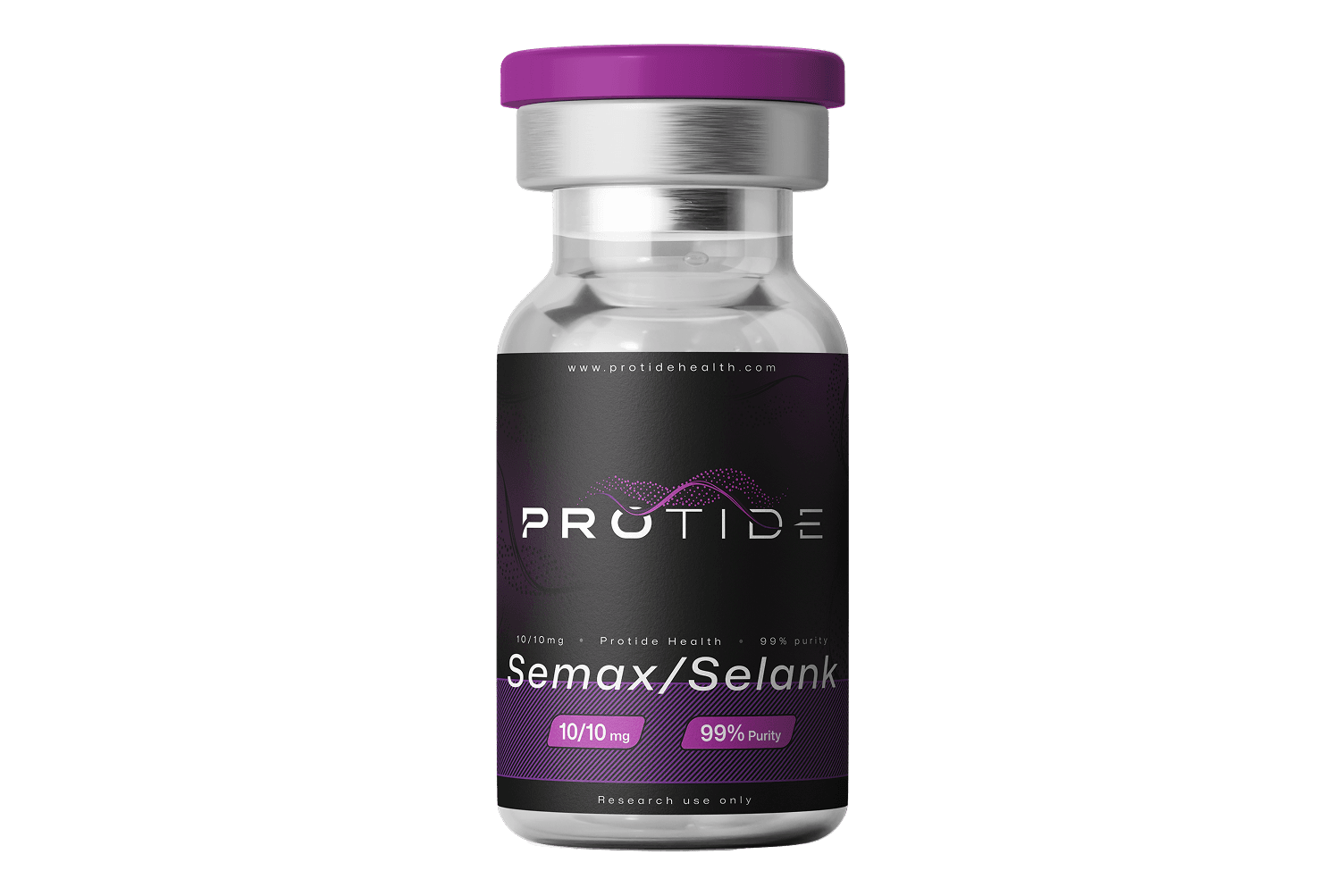
Investigating the Semax and Selank Blend
The Semax and Selank blend is a synergistic peptide combination developed strictly for laboratory investigation. Researchers examine this compound in preclinical models to understand its dual influence on neurotrophic signaling and monoamine pathways. This article details the molecular characteristics and observed mechanisms of this blend in experimental settings.
Structural Properties of the Semax and Selank Blend
In vitro studies analyze the specific physical properties of these two synthetic heptapeptides. The combination allows researchers to evaluate overlapping cellular pathways in controlled laboratory environments.
Peptide Components and Origin
Semax is a synthetic analogue derived from the adrenocorticotropic hormone (ACTH) fragment 4-10. Selank is a synthetic derivative of the immunomodulatory peptide tuftsin. Laboratory investigation measures:
-
Semax sequence structure: Met-Glu-His-Phe-Pro-Gly-Pro
-
Selank sequence structure: Thr-Lys-Pro-Arg-Pro-Gly-Pro
-
Combined pharmacokinetic stability and cellular absorption rates
Neurotrophic and GABAergic Pathways
Laboratory investigation examines how the Semax component influences brain-derived neurotrophic factor (BDNF) and nerve growth factor (NGF) (PubMed). Concurrently, preclinical models measure Selank’s interaction with the GABAergic system (inhibitory neural pathways).
Studies investigate:
-
BDNF and NGF expression metrics in the hippocampus
-
Indirect modulation of GABA receptor activity
-
Monoamine regulation (serotonin and dopamine pathways)
Neurological and Immune Biomarkers
Animal studies evaluate the compound’s effect on targeted markers following induced ischemic events (restricted blood supply). In vitro models also measure changes in inflammatory cytokine production (PubMed).
Observations in these models include:
-
Measured decreases in neuroinflammation markers
-
Cytokine balance and immune pathway modulation
-
Neuronal survival rates in experimental oxidative models
Behavioral and Monoamine Metrics
Researchers utilize rodent models to examine structural changes associated with monoamine turnover (PubMed). Studies observe specific physiological responses associated with the Semax and Selank blend during laboratory testing.
Evaluations focus on:
-
Serotonin and enkephalin signaling metrics
-
Hypothalamic-pituitary-adrenal (HPA) axis activity
-
Physiological stress and behavioral markers in rodent models
Comparing the Peptides in the Semax and Selank Blend
Researchers often analyze structurally related components to map varying receptor affinities before studying their combined mechanisms. Discover more compound classifications in our peptide categories.
Conclusion on the Semax and Selank Blend
In conclusion, the Semax and Selank blend remains a significant subject of laboratory investigation regarding neuroplasticity and monoamine regulation. Preclinical models continue to explore its synergistic mechanisms within GABAergic and neurotrophic pathways.
References
-
Eremin, K. O., et al. Neurochemical Research. PubMed
-
Zozulia, A. A., et al. Zh Nevrol Psikhiatr. PubMed
-
Sarkisova, K. Y., et al. Zh Vyssh Nerv Deiat. PubMed
-
Kolomin, T., et al. Selank Administration and GABAergic Effects. PubMed
Legal Disclaimer
The information provided in this description is for research purposes only. The Semax and Selank peptide blend is not approved by the U.S. Food and Drug Administration (FDA) or any regulatory authority for human consumption or therapeutic use. It is intended solely for investigational use in controlled laboratory settings by qualified researchers. Protide Health does not endorse or promote the use of Semax and Selank peptide blend in humans or animals outside of approved research protocols. Researchers must comply with all applicable local, state, and federal regulations, including obtaining necessary approvals for experimental use. Consult with regulatory authorities before initiating any research involving Semax and Selank peptide blend.
Products sold by Protide Health are for laboratory research purposes only and are not intended for human consumption, medical use, or veterinary use.
Be the first to review “Semax and Selank 5/5mg”
Related products
Cellular Longevity Research
Copper Peptides
Best Selling
Metabolic Research
Cognitive Research
Best Selling
Best Selling
Cellular Longevity Research
Reviews
There are no reviews yet.