



Exploring N-Acetyl Selank
N-Acetyl Selank is a synthetic heptapeptide currently the subject of extensive laboratory investigation. Preclinical models examine its interaction with central nervous system (CNS) pathways to understand neurotrophic signaling. This article details the molecular characteristics and observed mechanisms of this modified peptide in experimental settings.
Structural Characteristics and Stability
In vitro studies focus on how structural modifications influence peptide stability. Researchers measure the physical properties of N-Acetyl Selank to evaluate its viability in controlled laboratory environments.
The Role of Acetylation
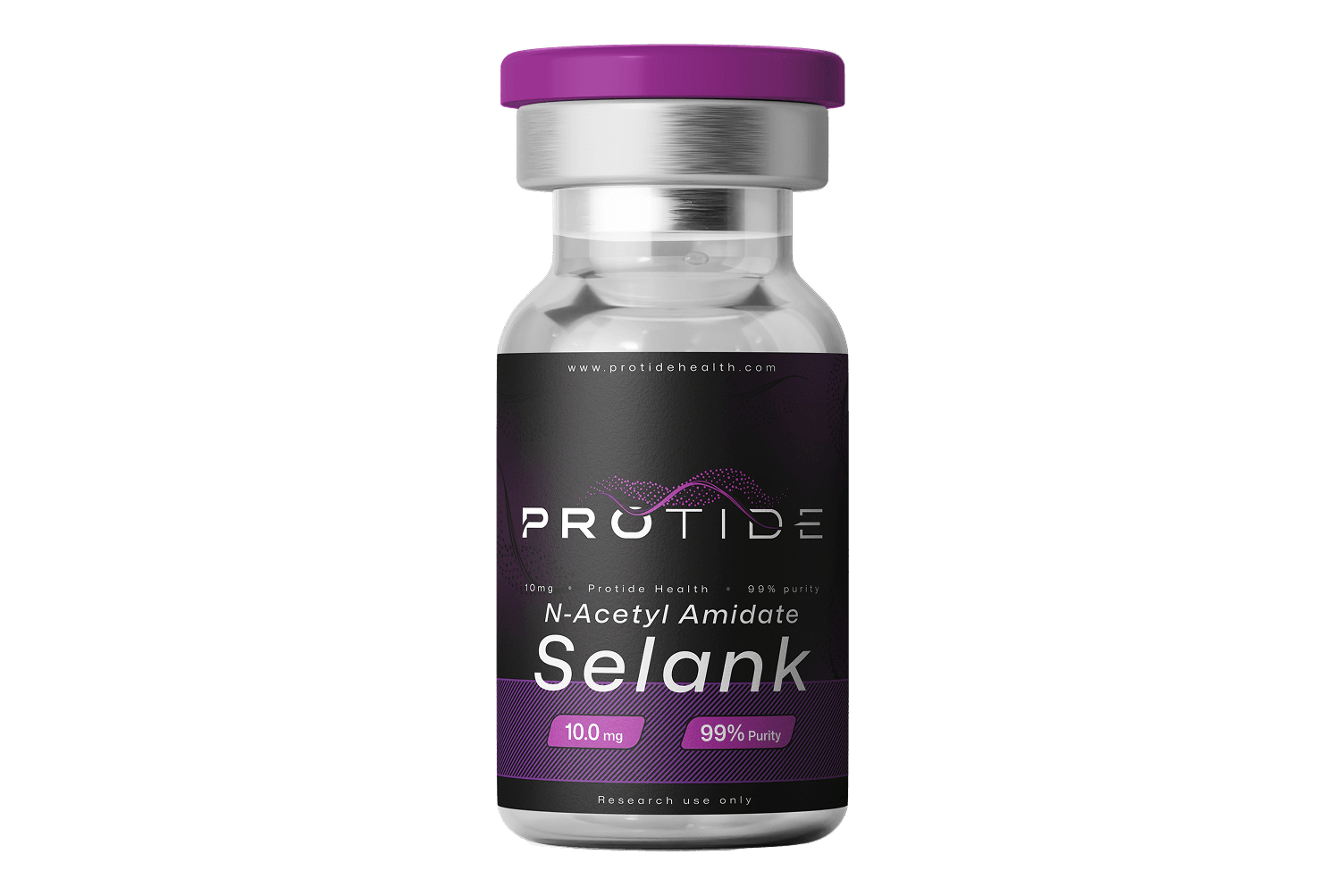
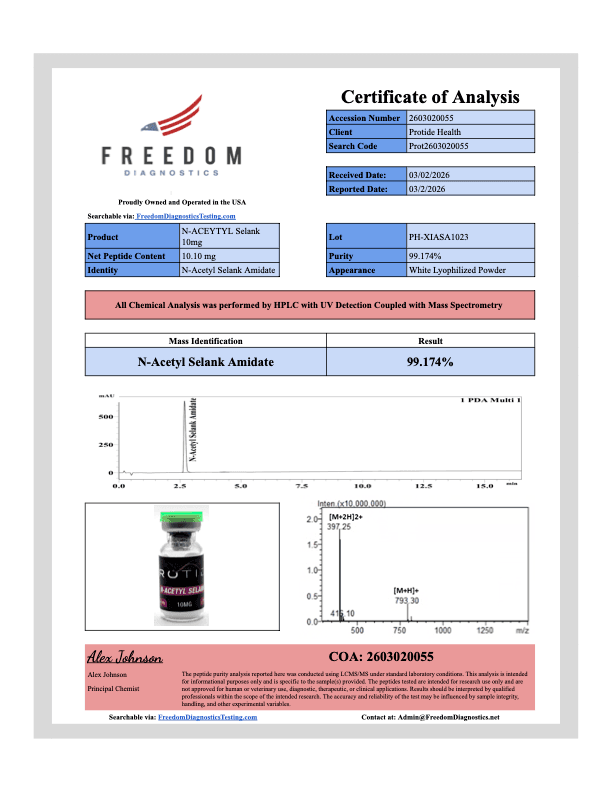
N-Acetyl Selank features the amino acid sequence Ac-Thr-Lys-Pro-Arg-Pro-Gly-Pro. The molecular weight is approximately 793.9 g/mol. The addition of an N-terminal acetyl group is studied for its effect on lipophilicity (the ability to dissolve in lipid-based environments) and structural stability.
Laboratory investigation examines:
-
Resistance to enzymatic degradation
-
Cellular permeability in in vitro models
-
Blood-brain barrier penetration characteristics
Mechanisms Evaluated in Animal Studies
Current research investigates specific cellular responses associated with N-Acetyl Selank. Animal studies focus on measuring changes in neurotransmitter levels and receptor activity.
GABAergic and Neurotrophic Pathways
Preclinical models measure how this compound interacts with the GABA system, examining its role in inhibitory neurotransmission (PubMed).
Studies investigate:
-
Indirect modulation of GABA receptor activity
-
Brain-derived neurotrophic factor (BDNF) expression in the hippocampus
-
Inhibition of enkephalin-degrading enzymes (carboxypeptidases)
Researchers can review comprehensive data on similar compounds in our peptide guides.
Physiological Measurements in Preclinical Models
Experimental applications strictly focus on mechanism evaluation rather than clinical outcomes. Researchers examine how N-Acetyl Selank influences biomarkers during induced physiological stress.
Monoamine and Immune Modulation
Animal studies measure monoamine turnover in specific brain regions, including the hypothalamus and cortex (PubMed).
Observations in these models include:
-
Serotonin and dopamine concentration changes
-
Hypothalamic-pituitary-adrenal (HPA) axis activity metrics
-
Upregulation of pro-inflammatory cytokines like IL-6 in isolated cells
To explore our full inventory of laboratory compounds, visit our research peptides catalog.
Comparing Selank and N-Acetyl Selank
Researchers often compare the standard Selank sequence with its acetylated derivative to map differences in pharmacokinetic profiles.
Frequently Asked Questions (FAQ)
What is N-Acetyl Selank 10mg used for?
It is strictly for laboratory investigation. Researchers use N-Acetyl Selank in in vitro and animal studies to measure its influence on neurotrophic pathways and monoamine regulation.
How does acetylation alter the peptide?
Preclinical models investigate the N-terminal acetyl group to determine its impact on enzymatic resistance and cellular penetration compared to the standard Selank structure.
Conclusion on N-Acetyl Selank Research
In conclusion, N-Acetyl Selank 10mg is a structurally modified peptide that remains a primary focus of neurochemical laboratory investigation. Preclinical models continue to measure its interactions with GABAergic and monoamine systems.
References
-
Seredenin, S. B., et al. Bulletin of Experimental Biology and Medicine. PubMed
-
Kozlovskaya, M. M., et al. Neuroscience and Behavioral Physiology. PubMed
-
Semenova, T. P., et al. Bulletin of Experimental Biology and Medicine. PubMed
-
Zozulya, A. A., et al. Bulletin of Experimental Biology and Medicine. PubMed
-
Uchakina, O. N., et al. Journal of Molecular Neuroscience. PubMed
-
Kolomin, T., et al. Advances in Experimental Medicine and Biology. PubMed
Legal Disclaimer
The information provided in this description is for research purposes only. The N-Acetyl Selank peptide is not approved by the U.S. Food and Drug Administration (FDA) or any regulatory authority for human consumption or therapeutic use. It is intended solely for investigational use in controlled laboratory settings by qualified researchers. Protide Health does not endorse or promote the use of N-Acetyl Selank peptide in humans or animals outside of approved research protocols. Researchers must comply with all applicable local, state, and federal regulations, including obtaining necessary approvals for experimental use. Consult with regulatory authorities before initiating any research involving N-Acetyl Selank peptide.
Products sold by Protide Health are for laboratory research purposes only and are not intended for human consumption, medical use, or veterinary use.
Be the first to review “Selank (N-Acetyl Amidate) 10mg”
Related products
Cellular Longevity Research
Cellular Longevity Research
Cognitive Research
Cognitive Research
Cognitive Research
Cellular Longevity Research
Cognitive Research
Cellular Longevity Research
Reviews
There are no reviews yet.