

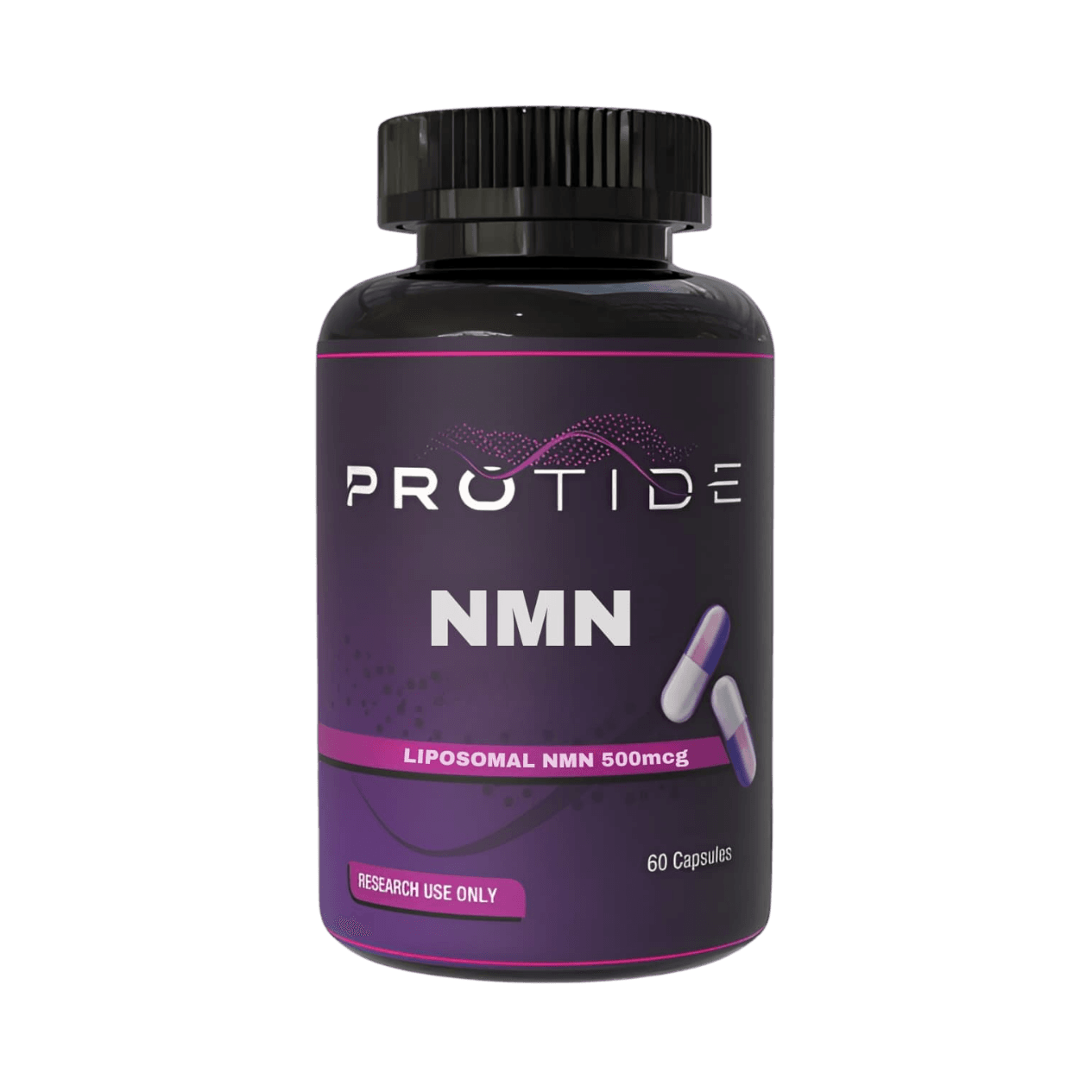
NMN (Liposomal)
$99.00
NMN (Liposomal) Research Capsules. NMN (Nicotinamide Mononucleotide) is a liposomal nucleotide derived from vitamin B3 and a direct precursor to nicotinamide adenine dinucleotide (NAD+). Extensively investigated in preclinical and in-vitro models to observe signaling mechanisms related to NAD+ biosynthesis and cellular energy metabolism.
Format: 60 Capsules (500mcg per capsule)
Notice: This product is strictly for research purposes and is not intended for human consumption or clinical use.
NMN (Liposomal) Research Capsules
NMN (Nicotinamide Mononucleotide) is a liposomal nucleotide derived from vitamin B3, developed specifically for laboratory investigation. Researchers utilize this synthetic formulation in preclinical models to map specific signaling mechanisms related to NAD+ biosynthesis and cellular energy metabolism. This article reviews the current in vitro data and the molecular mechanisms associated with this research compound.
What is Liposomal NMN?
In vitro studies focus on this synthetic nucleotide to evaluate its function as a direct precursor to NAD+ (nicotinamide adenine dinucleotide).
Formulation and Cellular Pathways
Available in a format of 60 capsules (500mcg per capsule), this liposomal formulation allows researchers to measure specific cellular uptake pathways. Laboratory investigation evaluates how it interacts with equilibrative nucleoside transporters and the Slc12a8 transporter during simulated absorption processes. Preclinical models evaluate:
-
Enzymatic conversion rates via NMNAT (NMN adenylyltransferase)
-
NAD+ biosynthesis salvage pathway metrics (PubMed)
-
Cytoplasmic and mitochondrial stability within isolated cells
Mechanisms Evaluated in Animal Studies
Current research investigates specific cellular responses associated with the upregulation of NAD+. Animal studies measure how this synthetic compound influences complex enzyme systems and longevity regulators.
Sirtuin Activation and Mitochondrial Models
Laboratory investigation examines the compound’s proposed role as a required co-substrate for sirtuins (SIRT1-7). In vitro models measure specific gene expressions related to inflammation and mitochondrial biogenesis.
Studies investigate:
-
Sirtuin activity rates in varying cellular environments
-
NAD+ pool concentrations following induced physiological stress
-
Modulation of the NF-κB inflammatory pathway (PMC)
Preclinical Investigation Areas
Experimental applications strictly focus on measuring specific biomarkers related to aging, metabolic health, and oxidative stress. Researchers utilize these models to understand fundamental cellular adaptations.
Insulin Signaling and Performance Metrics
Animal studies evaluate structural and metabolic changes in diet-induced obesity models and C57BL/6 mice. Researchers measure specific variations in skeletal muscle insulin signaling and related lipid profiles following laboratory testing (PMC).
Observations in these models include:
-
Increased phosphorylation of AKT and mTOR in cellular assays
-
Resting energy expenditure and physical activity markers
-
Reductions in specific liver enzyme concentrations (ALT)
Cellular Aging and DNA Repair Models
In vitro studies evaluate DNA repair capacity by measuring PARP activity in isolated cells. Researchers map changes across varying cell lines (muscle, liver, and brain) to record variations in oxidative stress resistance (PubMed).
Compound Specifications
Researchers often analyze structurally targeted molecules to map distinct synthesis pathways compared to precursor variations like NR (nicotinamide riboside).
Frequently Asked Questions (FAQ)
What is NMN investigated for?
Research examines its interaction with NAD+ biosynthesis pathways in controlled settings. Animal studies measure its influence on sirtuin activation, mitochondrial function, and insulin signaling biomarkers.
How does NMN differ from NR in research?
In vitro studies compare the specific biosynthesis pathways. Researchers measure how NMN is converted directly to NAD+ via NMNAT, whereas NR models require conversion to NMN via NRK enzymes first.
Conclusion on NMN
In conclusion, NMN (Liposomal) remain a significant focus of laboratory investigation regarding NAD+ synthesis and cellular aging models. Preclinical models continue to examine its interaction with sirtuin enzymes, insulin sensitivity pathways, and mitochondrial metrics.
References
-
Nadeeshani, H., et al. Journal of Advanced Research. PubMed
-
Song, Q., et al. Advances in Nutrition. PubMed
-
Alegre, G. F. S., et al. Aging and Disease. PMC
-
Zhang, Y., et al. Sheng Wu Gong Cheng Xue Bao. PubMed
-
Yoshino, M., et al. Science. PMC
Legal Disclaimer
The information provided in this description is for research purposes only. The NMN (Liposomal) is not approved by the U.S. Food and Drug Administration (FDA) or any regulatory authority for human consumption or therapeutic use. It is intended solely for investigational use in controlled laboratory settings by qualified researchers. Protide Health does not endorse or promote the use of NMN (Liposomal) in humans or animals outside of approved research protocols. Researchers must comply with all applicable local, state, and federal regulations, including obtaining necessary approvals for experimental use. Consult with regulatory authorities before initiating any research involving NMN (Liposomal).
Products sold by Protide Health are for laboratory research purposes only and are not intended for human consumption, medical use, or veterinary use.
Be the first to review “NMN (Liposomal)”
Related products
Cellular Longevity Research
Cellular Longevity Research
Cellular Longevity Research
Cellular Longevity Research
Best Selling
Cellular Longevity Research
Cellular Longevity Research
Cellular Longevity Research
Reviews
There are no reviews yet.