

What is MOTS-c?
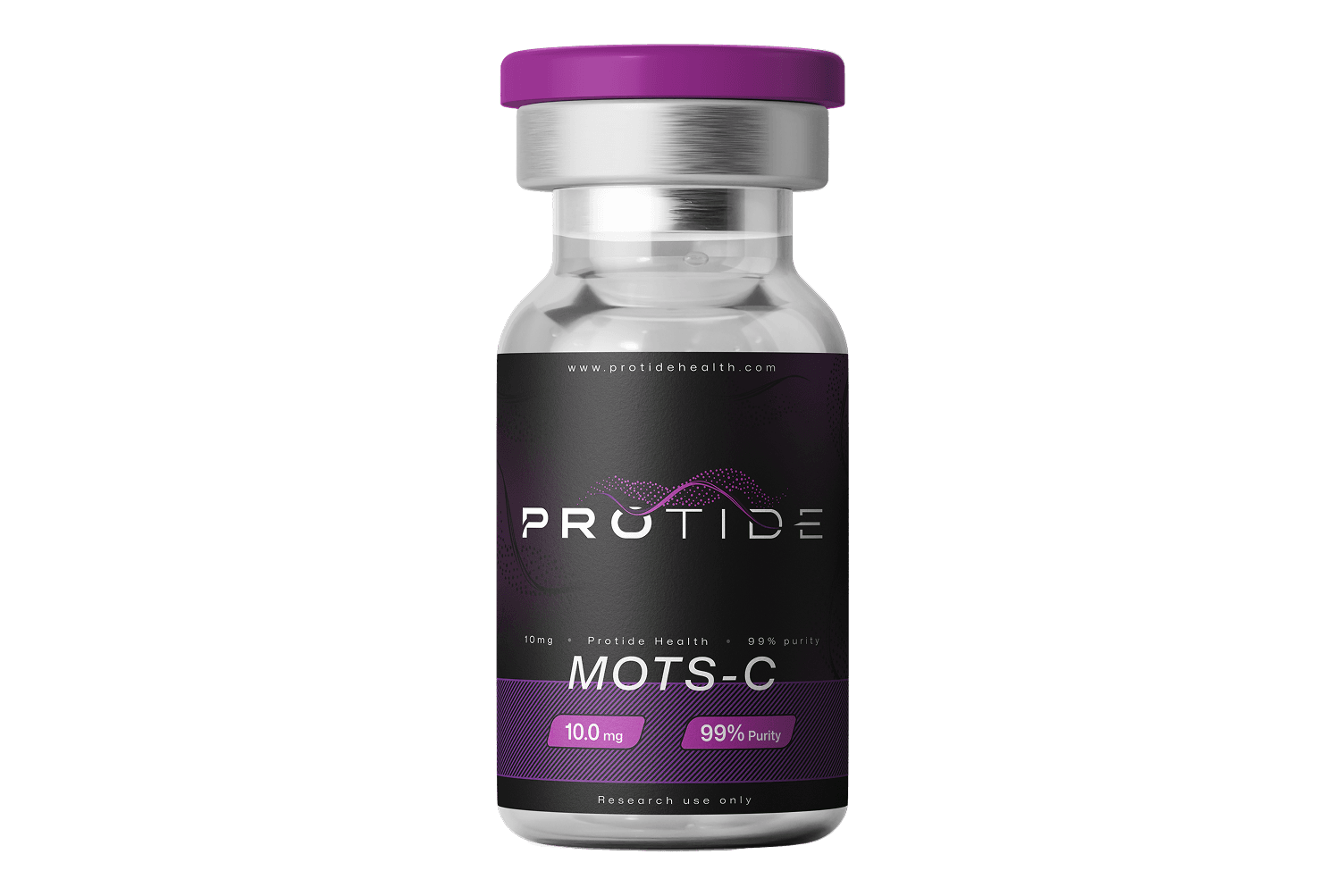
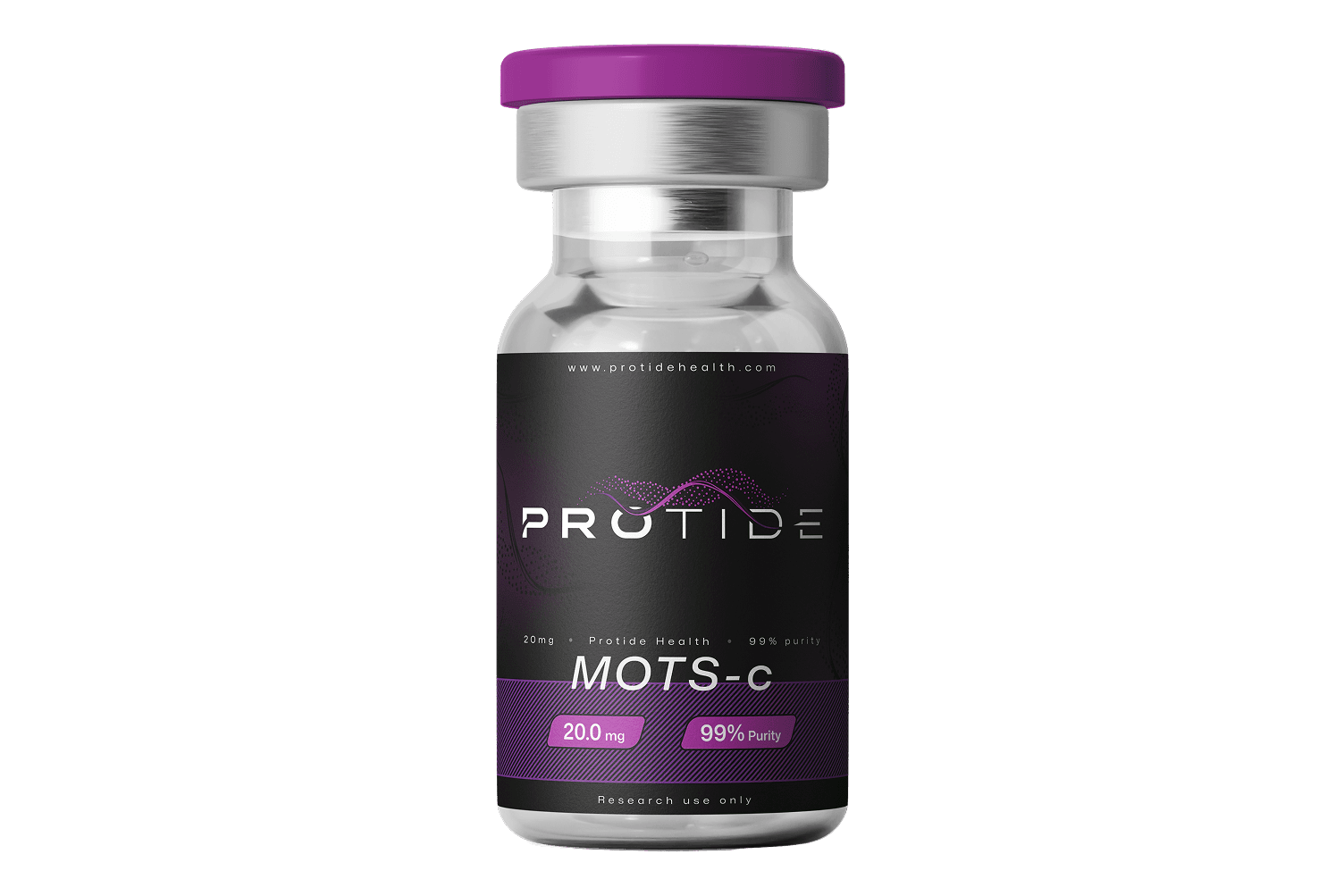
MOTS-c peptide (10mg, 20mg, and 40mg) is a synthetic research peptide that matches a short sequence naturally made inside the mitochondria, the “power plants” of cells. In this listing, MOTS-c peptide is supplied as either a 10mg, 20mg, or 40mg lyophilized (freeze-dried) powder in a single research vial for reconstitution and use in controlled lab models only.
Researchers are studying MOTS-c peptide for its role in metabolism, insulin signaling, exercise capacity, and aging-related pathways in cell and animal systems, but it is not approved for human use or any medical purpose. Lee et al., 2015; Kim et al., 2019
- Peptide type: Single mitochondrial-derived research peptide studied in metabolic, exercise, and aging models.
- Vial content: 10mg – 40mg MOTS-c peptide as a lyophilized powder in a sealed research vial.
- Primary research focus: Metabolism and insulin signaling, exercise performance, and aging-related stress responses in preclinical models.
MOTS-c Peptide Overview & Key Properties
MOTS-c is a 16-amino-acid mitochondrial-derived peptide (MDP). In the body, it is encoded in the mitochondrial 12S rRNA region and acts like a small signaling hormone that helps cells respond to energy stress. Frontiers in Endocrinology review, 2023
The MOTS-c peptide offered here is a synthetic version designed for laboratory use. It arrives as a lyophilized powder that labs typically store cold and dry and reconstitute according to internal standard operating procedures (SOPs). In preclinical research, MOTS-c is often grouped with metabolism-focused research peptides that interact with energy and stress pathways such as AMPK. Lee et al., 2015
- Peptide class or family: Mitochondrial-derived peptide linked to cellular energy sensing and insulin sensitivity.
- Vial content and typical lab handling: Single 10mg, 20mg, or 40mg vial of lyophilized powder, reconstituted and aliquoted under sterile lab conditions.
- Suggested storage concept in lab settings: Keep cool, dry, and protected from light; avoid unnecessary freeze–thaw cycles in line with lab SOPs.
MOTS-c Mechanism of Action
In simple terms, MOTS-c helps cells sense and adapt to energy stress in preclinical models. It appears to activate AMPK, a key energy-sensing enzyme that tells cells to use more glucose and fats for fuel and to improve metabolic balance. In animal studies, this AMPK-linked signaling has been associated with better insulin sensitivity and healthier glucose handling under high-fat diet stress. Lee et al., 2015; Pham et al., 2025
MOTS-c is unusual because it is encoded in mitochondrial DNA but can move to the nucleus when cells are under metabolic stress. Once in the nucleus, MOTS-c can bind chromatin and help regulate genes involved in antioxidant defenses and stress resistance, which may support cell survival in harsh conditions. Kim et al., 2018 This “mitonuclear” signaling is a major reason MOTS-c is of interest in research, although this work is still early and mainly preclinical. Frontiers in Endocrinology review, 2023
MOTS-c Peptide Research
Researchers look at MOTS-c peptide for several broad themes, all within controlled lab and preclinical settings. Results below come from animal, cell, or early human-related work and do not indicate approved medical uses.
1. MOTS-c and metabolic health models
In mouse models fed a high-fat diet, MOTS-c administration has been associated with better insulin sensitivity, improved glucose tolerance, and reduced fat gain compared with untreated animals. Lee et al., 2015 These studies suggest MOTS-c can act as an “exercise-mimetic” signal in skeletal muscle, helping glucose enter cells and supporting metabolic flexibility under stress.
Review articles describe MOTS-c as a “metabolic regulator” that influences whole-body energy use, insulin action, and body weight across multiple preclinical experiments. Frontiers in Endocrinology review, 2023; Kim & colleagues, 2019 Cohort studies have also reported links between circulating MOTS-c levels and markers such as fasting insulin and body mass index, though these are observational and do not prove cause and effect.
2. MOTS-c and exercise & muscle function
A high-impact study in Nature Communications found that exercise in humans increased MOTS-c levels in muscle and blood, and that MOTS-c treatment in mice improved treadmill running capacity and power output under both normal and high-fat diet conditions. Zhang et al., 2021 In these models, animals treated with MOTS-c ran longer and showed better performance than controls, especially under metabolic stress.
Other work suggests MOTS-c can directly modulate muscle metabolism, including glucose uptake and mitochondrial activity, sometimes through targets such as CK2 and AMPK in skeletal muscle. Pham et al., 2025; Kim et al., 2018 These findings make MOTS-c peptide a popular tool for labs interested in exercise-related and muscle-function research.
3. MOTS-c and aging & longevity research
Because MOTS-c levels appear to decline with age in both humans and mice, some studies frame it as a potential “aging-related” signal. Frontiers in Endocrinology review, 2023 In older mice, MOTS-c treatment has been associated with better physical performance, improved metabolic markers, and changes in body composition in treadmill and rotarod tests. Zhang et al., 2021
Additional preclinical work points to roles in stress resistance, antioxidant defense, and mitochondrial protection in aging tissues, including the heart. Pham et al., 2025 However, these are experimental findings under controlled conditions and do not show that MOTS-c slows aging in humans.
4. MOTS-c and emerging research data
Direct research intervention data on native MOTS-c are still very limited. Most of what is known comes from:
- Observational studies linking natural MOTS-c levels with insulin sensitivity or cardiovascular markers. Kim & colleagues, 2019
- A Phase 1a/1b clinical trial of CB4211, a MOTS-c analog, in people with nonalcoholic fatty liver disease, which reported that four weeks of treatment improved some liver and metabolic biomarkers and was generally well tolerated. ClinicalTrials.gov NCT03998514; Loomba et al., AASLD abstract
These studies support the idea that the MOTS-c pathway is interesting for human metabolism, but they do not justify self-use or any medical claims. MOTS-c peptide remains a research-use-only compound.
MOTS-c Peptide Specifications Table
| Parameter | Details |
|---|---|
| Peptide name | MOTS-c peptide |
| Vial content | 10mg – 40mg (lyophilized powder) |
| Peptide type | Single peptide |
| Typical use case | Metabolic, exercise, and aging-related preclinical / in vitro models |
| Storage guidance | Cool, dry, dark; follow internal laboratory SOPs |
| Intended use | Laboratory research only, not for human use |
MOTS-c Peptide FAQs
Where to buy MOTS-c online?
You can buy MOTS-c peptide for research use in the United States at Protide Health. Protide provides clearly labeled, third-party-tested research peptides, including MOTS-c peptide, for qualified labs. All products are sold strictly for laboratory and in vitro research, not for human consumption.
How is MOTS-c peptide typically stored in a lab?
Vials of MOTS-c peptide are shipped as lyophilized powder and are stored in a cool, dry, and dark environment, such as a refrigerator or freezer, in line with lab SOPs. After reconstitution, many labs aliquot solutions and minimize freeze–thaw cycles to maintain peptide integrity. Exact storage and handling procedures should follow the institution’s internal quality and safety standards.
Conclusion: Summary of MOTS-c Peptide for Research
MOTS-c peptide is a single mitochondrial-derived research peptide supplied as a lyophilized powder for controlled laboratory use. It is studied for how it links mitochondrial signaling to energy balance, insulin sensitivity, exercise capacity, and cellular stress responses in preclinical models.
Across animal and cell studies, MOTS-c has emerged as a versatile tool for exploring metabolic disease, exercise performance, cardiovascular stress, and aging biology. Lee et al., 2015; Pham et al., 2025 At the same time, human evidence is still early, and MOTS-c peptide remains strictly a research-only compound, not for human use or any therapeutic application.
Citations
- Lee C. et al., 2015. The mitochondrial-derived peptide MOTS-c promotes metabolic homeostasis and reduces obesity and insulin resistance. Cell Metabolism. Europe PMC
- Kim S.J. & colleagues, 2019. MOTS-c: an equal opportunity insulin sensitizer. Journal of Molecular Medicine. Springer
- Kim K.H. et al., 2018. The mitochondrial-encoded peptide MOTS-c translocates to the nucleus to regulate gene expression in response to metabolic stress. Cell Metabolism. ScienceDirect
- Zhang et al., 2021. MOTS-c is an exercise-induced mitochondrial-encoded regulator of age-dependent physical decline and muscle homeostasis. Nature Communications. Nature
- Zheng Y. et al., 2023. MOTS-c: A promising mitochondrial-derived peptide for therapeutic exploitation. Frontiers in Endocrinology. Frontiers
- Pham T. et al., 2025. Mitochondria-derived peptide MOTS-c restores mitochondrial respiration in type 2 diabetic heart. Frontiers in Physiology. Frontiers
- Alzheimer’s Drug Discovery Foundation, 2020. MOTS-c scientific evidence summary. AlzDiscovery
- ClinicalTrials.gov. A Phase 1a/1b Study of CB4211 in Healthy Non-obese Subjects and Subjects With Nonalcoholic Fatty Liver Disease (MOTS-c analog). NCT03998514
Legal Disclaimer for MOTS-c Peptide
The information provided in this description is for research purposes only. The MOTS-c peptide is not approved by the U.S. Food and Drug Administration (FDA) or any regulatory authority for human consumption or therapeutic use. It is intended solely for investigational use in controlled laboratory settings by qualified researchers. Protide Health does not endorse or promote the use of MOTS-c peptide in humans or animals outside of approved research protocols. Researchers must comply with all applicable local, state, and federal regulations, including obtaining necessary approvals for experimental use. Consult with regulatory authorities before initiating any research involving MOTS-c peptide.
Products sold by Protide Health are for laboratory research purposes only and are not intended for human consumption, medical use, or veterinary use.
| Select vial strength: | 10mg, 20mg, 40mg |
|---|
Be the first to review “MOTS-c”
Related products
Best Selling
Best Selling
Cellular Longevity Research
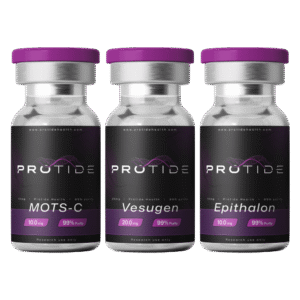
Cellular Longevity Research Bundle (MOTS-c, Epithalon, Vesugen)
Cellular Longevity Research
Cellular Longevity Research
Cellular Longevity Research

Cellular Longevity Research
Best Selling
Reviews
There are no reviews yet.