

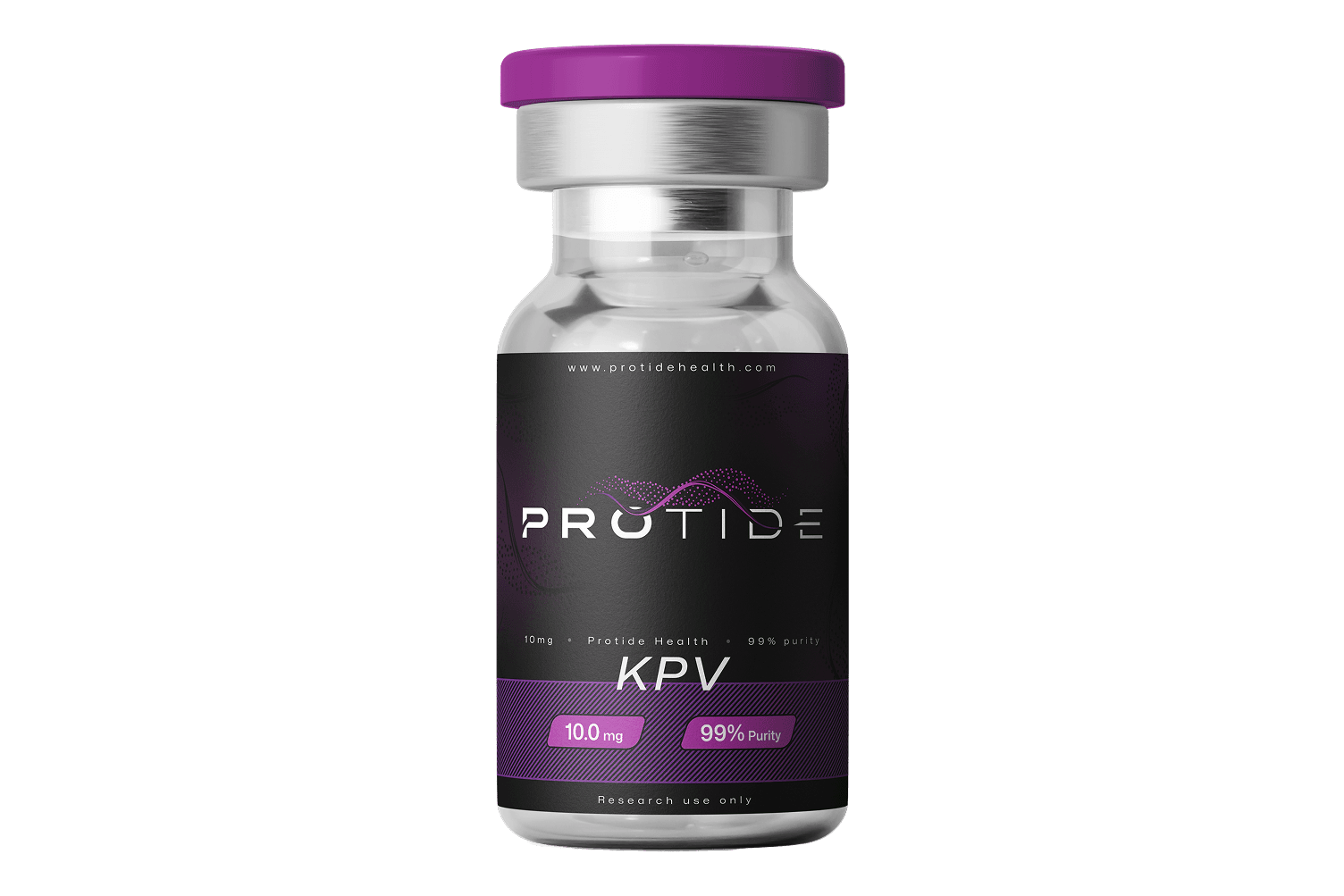
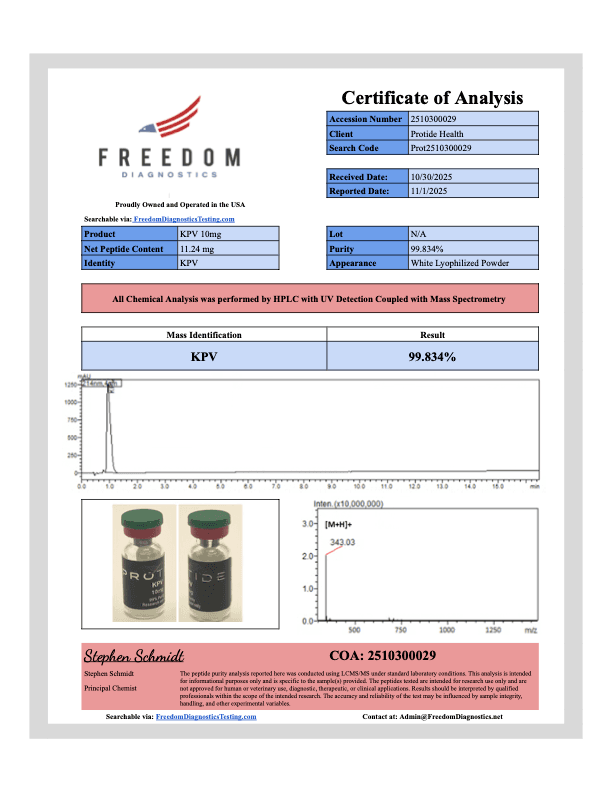
KPV 10mg Peptide: Inflammatory Signaling and Barrier-Model Research
KPV 10mg is a synthetic tripeptide (Lys-Pro-Val) studied in laboratory settings to examine inflammatory signaling and epithelial barrier biology. Research commonly frames KPV as a short α-MSH–derived sequence used to probe melanocortin-linked pathways and downstream transcriptional responses in cell and animal models (PubMed).
KPV 10mg Research Overview
KPV is frequently discussed as a minimal peptide motif used to investigate how small sequences interface with immune signaling networks. Preclinical literature includes experiments in intestinal epithelial systems and inflammation-model readouts where investigators quantify pathway activity and mediator release (PubMed).
Studies investigate KPV in:
-
Epithelial barrier models (tight-junction and permeability readouts).
-
Innate immune signaling assays (cytokine and chemokine panels as endpoints).
-
Tissue-response models where histology and molecular markers are tracked.
Understanding KPV 10mg in Immune and Tissue Research
KPV 10mg is a stable, synthetic tripeptide (Lysine-Proline-Valine) frequently utilized in laboratory research. Derived from the C-terminal sequence of alpha-melanocyte-stimulating hormone (α-MSH), it is valued for its specific interactions with cellular pathways while minimizing melanotropic effects. Preclinical models commonly examine its role in inflammatory modulation and tissue repair pathways.
Exploring the Mechanisms of KPV 10mg
Laboratory investigations focus on how this tripeptide interacts with melanocortin receptors (primarily MC1R and MC3R). Researchers study its potential to modulate various signaling cascades in controlled environments.
Anti-Inflammatory and Immune Pathways
In vitro studies investigate the compound’s influence on pro-inflammatory cytokine production (PubMed). Preclinical models examine several specific mechanisms:
-
Downregulation of NF-κB signaling pathways in macrophage cultures.
-
Modulation of regulatory T-cell (Treg) activity.
-
Alterations in Th1 and Th17 immune responses during laboratory testing.
Researchers can find relevant compounds by exploring the immune research category.
Research Applications in Preclinical Models
The primary role of the peptide involves the study of immune-mediated pathways and regenerative processes. Scientists utilize these compounds to observe cellular communication and repair mechanisms in specific environments.
Gastrointestinal and Tissue Repair Studies
Animal studies measure the peptide’s effects on mucosal damage and cellular regeneration. Preclinical models of colitis examine the reduction of colonic markers such as TNF-α and IL-6 (PubMed). Research investigates various endpoints:
-
Fibroblast proliferation rates in dermal injury models.
-
Collagen synthesis and deposition in regenerative testing.
-
Inflammatory cell infiltration in gastrointestinal models.
Immune-Mediated Inflammatory Models
Studies investigate the peptide’s influence on complex inflammatory diseases. Preclinical models measure markers in dermatitis and macrophage cultures to track biological changes. Research examines:
-
Suppressed LPS-induced inflammation in laboratory settings.
-
Alterations in microglial activation within neuroinflammation models.
-
Decreased Th17 cell activity in controlled environments.
Concluding Thoughts on KPV 10mg
KPV 10mg serves as a vital instrument for investigating inflammatory responses and tissue regeneration. Preclinical studies continue to examine its influence on immune regulation, collagen synthesis, and melanocortin receptor pathways.
References
-
Authors. “KPV Anti-Inflammatory Effects.” PMC. PubMed
-
Authors. “KPV Pharmacokinetics.” PMC. PubMed
-
Authors. “KPV Immune Modulation.” PMC. PubMed
-
Authors. “KPV Tissue Repair.” PMC. PubMed
Legal Disclaimer
The information provided in this description is for research purposes only. The KPV peptide is not approved by the U.S. Food and Drug Administration (FDA) or any regulatory authority for human consumption or therapeutic use. It is intended solely for investigational use in controlled laboratory settings by qualified researchers. Protide Health does not endorse or promote the use of KPV peptide in humans or animals outside of approved research protocols. Researchers must comply with all applicable local, state, and federal regulations, including obtaining necessary approvals for experimental use. Consult with regulatory authorities before initiating any research involving KPV peptide.
Products sold by Protide Health are for laboratory research purposes only and are not intended for human consumption, medical use, or veterinary use.
Be the first to review “KPV 10mg”
Related products
Best Selling
Best Selling
Dermatological Research
Gastrointestinal Research
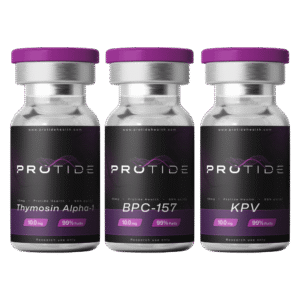
Gastrointestinal & Immune Research Bundle (Thymosin Alpha-1, KPV, BPC-157)
Best Selling
Best Selling
Cellular Longevity Research
Cellular Longevity Research
Reviews
There are no reviews yet.