

Kisspeptin 10mg
$65.00
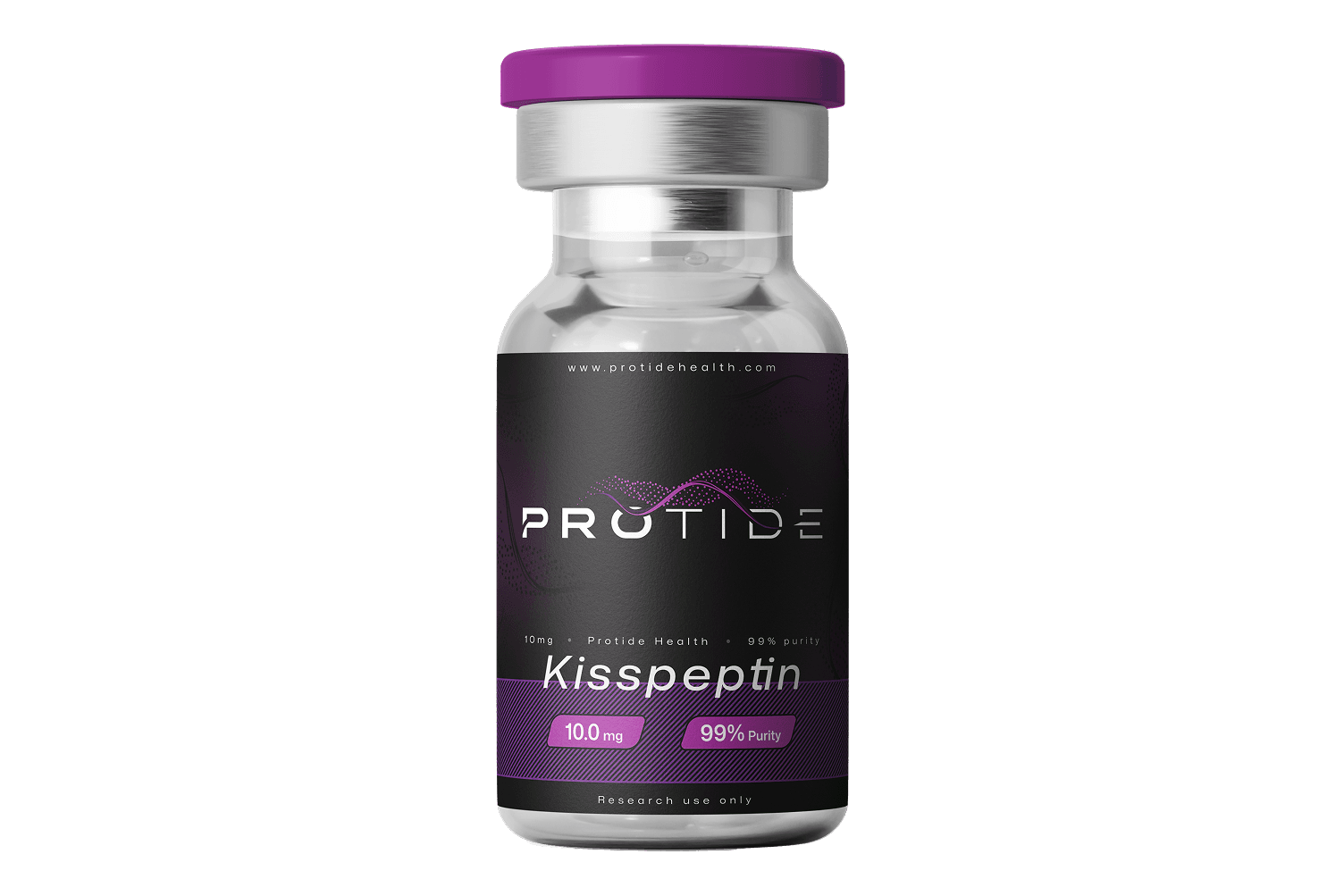
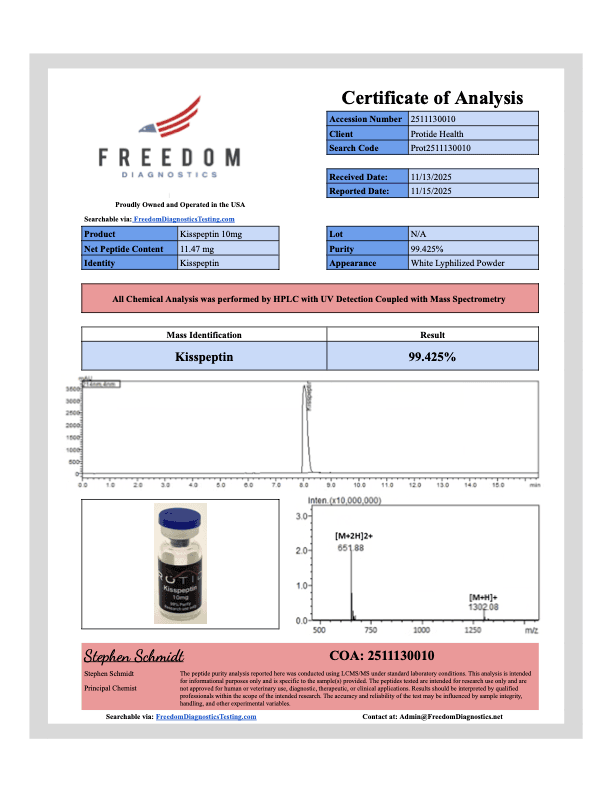
Kisspeptin peptide studied in preclinical gonadotropin-releasing hormone (GnRH) secretion and neuroendocrine signaling models. Available in 10mg lyophilized vials. Purity >99% verified by third-party HPLC testing. USA domestic fulfillment. For research use only. Not for human consumption.
Understanding Kisspeptin 10mg in Neuroendocrine Research
Kisspeptin 10mg is a widely studied peptide in neuroendocrine research. This peptide originates from the KISS1 gene and plays a critical role in cellular signaling pathways. Laboratory investigations frequently utilize this compound to examine fundamental biological mechanisms.
Exploring the Mechanisms of Kisspeptin 10mg
Kisspeptin acts primarily through the G-protein-coupled receptor GPR54 (KISS1R) in preclinical models. Studies investigate how this interaction drives the release of luteinizing hormone (LH) and follicle-stimulating hormone (FSH). Animal studies examine these pathways to understand reproductive physiology and metabolic signaling.
HPG Axis Modulation
Research examines how the peptide modulates the hypothalamic-pituitary-gonadal (HPG) axis. In vitro studies measure the binding affinity of kisspeptin to GPR54 receptors (PubMed). Preclinical models observe specific mechanisms:
-
Intracellular calcium increases during receptor activation.
-
MAPK (mitogen-activated protein kinase) signaling pathways show altered activity levels.
-
GnRH neuron firing rates change in laboratory conditions.
Research Applications in Preclinical Models
The role of this peptide focuses heavily on regulating neuroendocrine function. Scientists study its interactions within strictly controlled environments. These investigations yield data on cellular communication and hormonal balance.
Reproductive Physiology Studies
Laboratory models measure the effects of the peptide on hormonal secretion. Preclinical studies note alterations in LH and FSH levels following exposure (PubMed). Animal models investigate several endpoints:
-
Pulsatile LH secretion patterns in hypogonadotropic models.
-
Gonadal function markers during laboratory testing.
-
Activation of the reproductive axis in controlled environments.
Puberty Regulation and Metabolism
Studies investigate the influence of the peptide on developmental timelines. Preclinical models measure hypothalamic KISS1 expression to track biological changes. Research examines:
-
Hypothalamic neuropeptide Y (NPY) expression in obesity models.
-
Insulin sensitivity alterations in KISS1 knockout rodents.
-
Energy homeostasis mechanisms during laboratory trials.
Evaluating Pharmacokinetics
Animal studies evaluate the pharmacokinetic profile of the peptide. Preclinical models observe rapid clearance rates due to peptidase degradation (PubMed). Researchers document peak plasma concentrations to understand its stability in vitro.
Human evidence is absent regarding therapeutic applications. These compounds remain strictly for laboratory investigation. Researchers can review various peptide categories for related neuroendocrine compounds.
Concluding Thoughts on Kisspeptin 10mg
Kisspeptin 10mg serves as a vital instrument for investigating the HPG axis and metabolic signaling. Preclinical studies continue to examine its influence on cellular pathways and hormone secretion.
References
-
Authors. “Kisspeptin Mechanism.” PMC. PubMed
-
Authors. “Kisspeptin Physiology.” PMC. PubMed
-
Authors. “Kisspeptin Pharmacokinetics.” PMC. PubMed
Legal Disclaimer
The information provided in this description is for research purposes only. The Kisspeptin peptide is not approved by the U.S. Food and Drug Administration (FDA) or any regulatory authority for human consumption or therapeutic use. It is intended solely for investigational use in controlled laboratory settings by qualified researchers. Protide Health does not endorse or promote the use of Kisspeptin peptide in humans or animals outside of approved research protocols. Researchers must comply with all applicable local, state, and federal regulations, including obtaining necessary approvals for experimental use. Consult with regulatory authorities before initiating any research involving Kisspeptin peptide.
Products sold by Protide Health are for laboratory research purposes only and are not intended for human consumption, medical use, or veterinary use.
Be the first to review “Kisspeptin 10mg”
Related products
Circadian Research
Best Selling
Dermatological Research
Cognitive Research
Reviews
There are no reviews yet.