

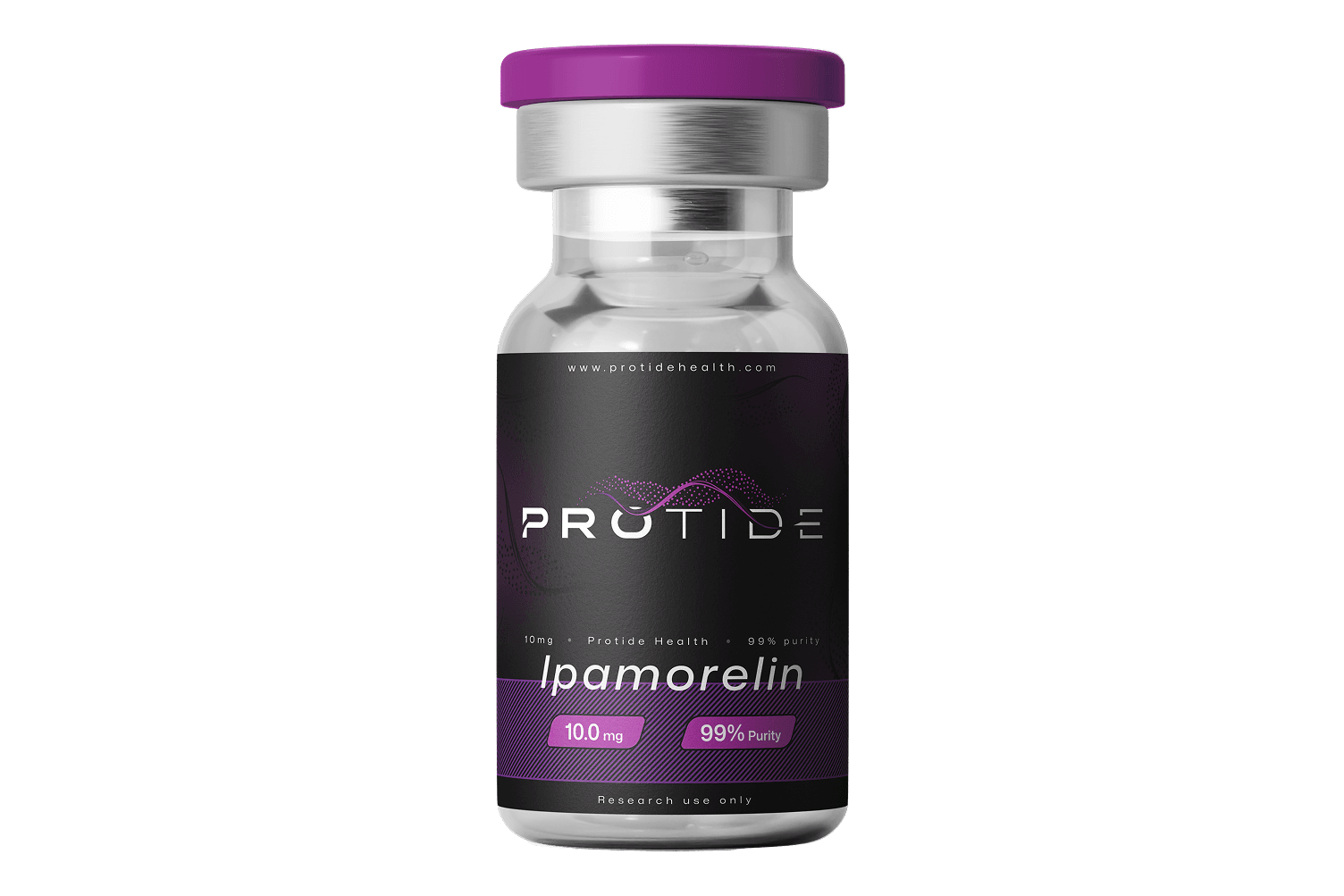
Ipamorelin: Selective Growth Hormone Secretagogue Research
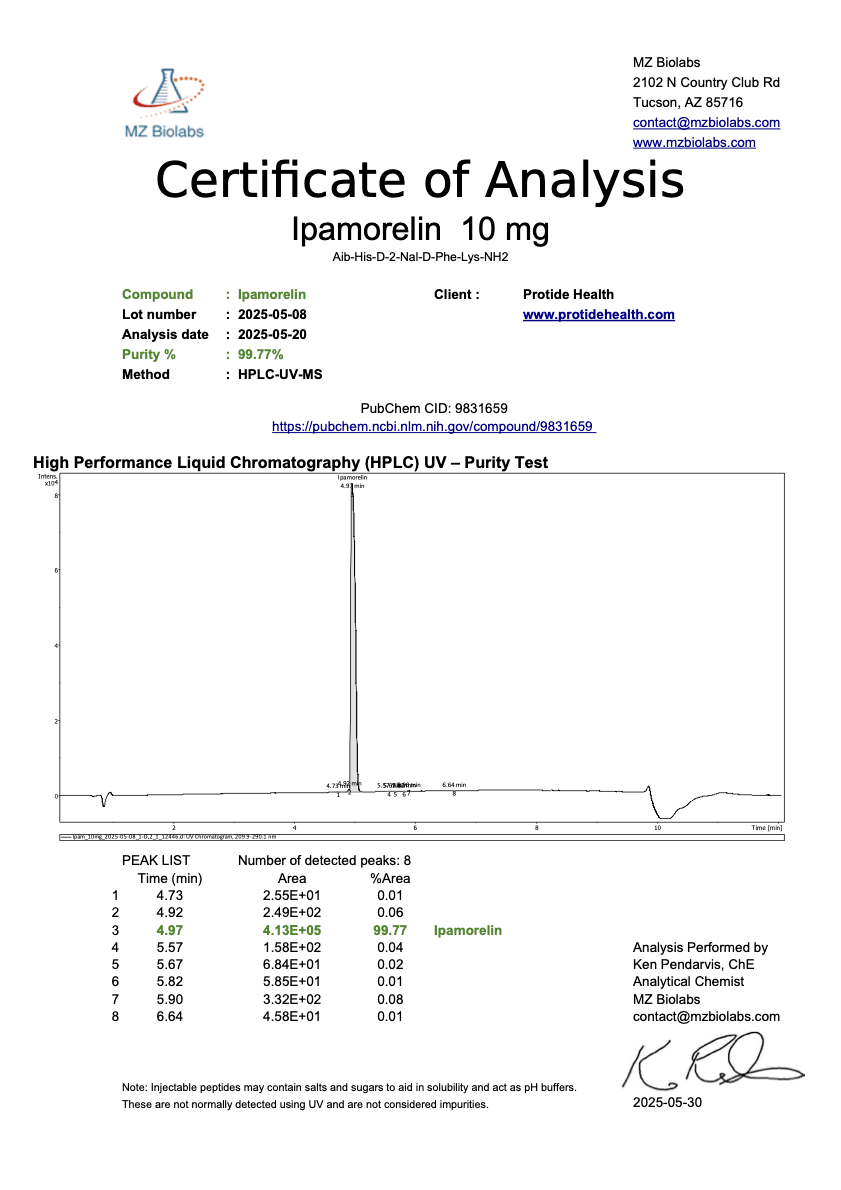
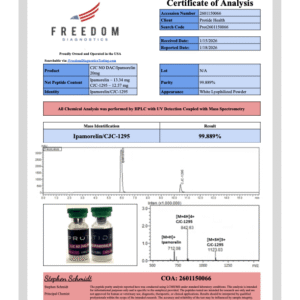
Ipamorelin is a synthetic pentapeptide (Aib-His-D-2-Nal-D-Phe-Lys-NH2) frequently utilized in neuroendocrine and metabolic research. This peptide functions as a highly selective growth hormone secretagogue (GHS) that targets specific pituitary receptors. Preclinical studies utilize this compound to investigate growth hormone (GH) dynamics, muscle physiology, and cellular metabolism.
Exploring the Mechanisms of Ipamorelin
Laboratory investigations focus on the peptide’s interaction with the growth hormone secretagogue receptor (GHS-R1a) located in the pituitary and hypothalamus. Researchers study these pathways to understand how specific ligands drive cellular responses in controlled environments.
Selective GH Stimulation Pathways
In vitro studies examine how the peptide mimics endogenous ghrelin to stimulate GH release (PubMed). Preclinical models observe specific intracellular mechanisms:
-
Increased intracellular calcium levels via G-protein-coupled receptor signaling.
-
High selectivity for GH release without significant elevation of ACTH, cortisol, or prolactin.
-
Enhanced cyclic adenosine monophosphate (cAMP) production in pituitary cell cultures.
Research Applications in Preclinical Models
The primary role of this pentapeptide centers on the selective stimulation of the GH axis. Scientists use these compounds in animal models to yield data regarding metabolic regulation and neuroendocrine function.
Muscle Physiology and Protein Synthesis
Animal studies measure the compound’s influence on anabolic pathways mediated by GH and IGF-1. Preclinical models observe alterations in lean mass markers following administration (PubMed). Research investigates several endpoints:
-
Upregulation of myogenic markers (such as MyoD) in skeletal muscle cells.
-
Protein synthesis rates during laboratory testing.
-
Alterations in insulin-like growth factor-1 (IGF-1) levels in controlled environments.
Adipose Tissue Metabolism
Studies investigate the lipolytic effects of the peptide in metabolic models. Preclinical studies measure hormone-sensitive lipase (HSL) activity to track changes in lipid processing (PubMed). Research examines:
-
Increased free fatty acid release in rodent adipocyte cultures.
-
Enhanced β-oxidation pathways in laboratory settings.
-
Fat mass alterations in obese rodent models.
Concluding Thoughts on Ipamorelin
Ipamorelin serves as a precise instrument for investigating GH secretion, lipolysis, and muscle anabolism. Preclinical studies continue to examine its highly selective interaction with GHS-R1a receptors and subsequent downstream signaling.
References
-
Authors. “Ipamorelin Pharmacology.” PMC. PubMed
-
Authors. “Ipamorelin Metabolism.” PMC. PubMed
-
Authors. “Ipamorelin Selectivity.” PMC. PubMed
-
Authors. “Ipamorelin Pharmacokinetics.” PMC. PubMed
Legal Disclaimer
The information provided in this description is for research purposes only. The Ipamorelin peptide is not approved by the U.S. Food and Drug Administration (FDA) or any regulatory authority for human consumption or therapeutic use. It is intended solely for investigational use in controlled laboratory settings by qualified researchers. Protide Health does not endorse or promote the use of Ipamorelin peptide in humans or animals outside of approved research protocols. Researchers must comply with all applicable local, state, and federal regulations, including obtaining necessary approvals for experimental use. Consult with regulatory authorities before initiating any research involving Ipamorelin peptide.
Products sold by Protide Health are for laboratory research purposes only and are not intended for human consumption, medical use, or veterinary use.
Be the first to review “Ipamorelin 10mg”
Related products
Best Selling
Metabolic Research
Musculoskeletal Research
Tissue Regeneration Research Bundle (BPC-157, TB-500, MOTS-c)
Cellular Longevity Research
Cellular Longevity Research
Best Selling
Best Selling
Best Selling
Reviews
There are no reviews yet.