

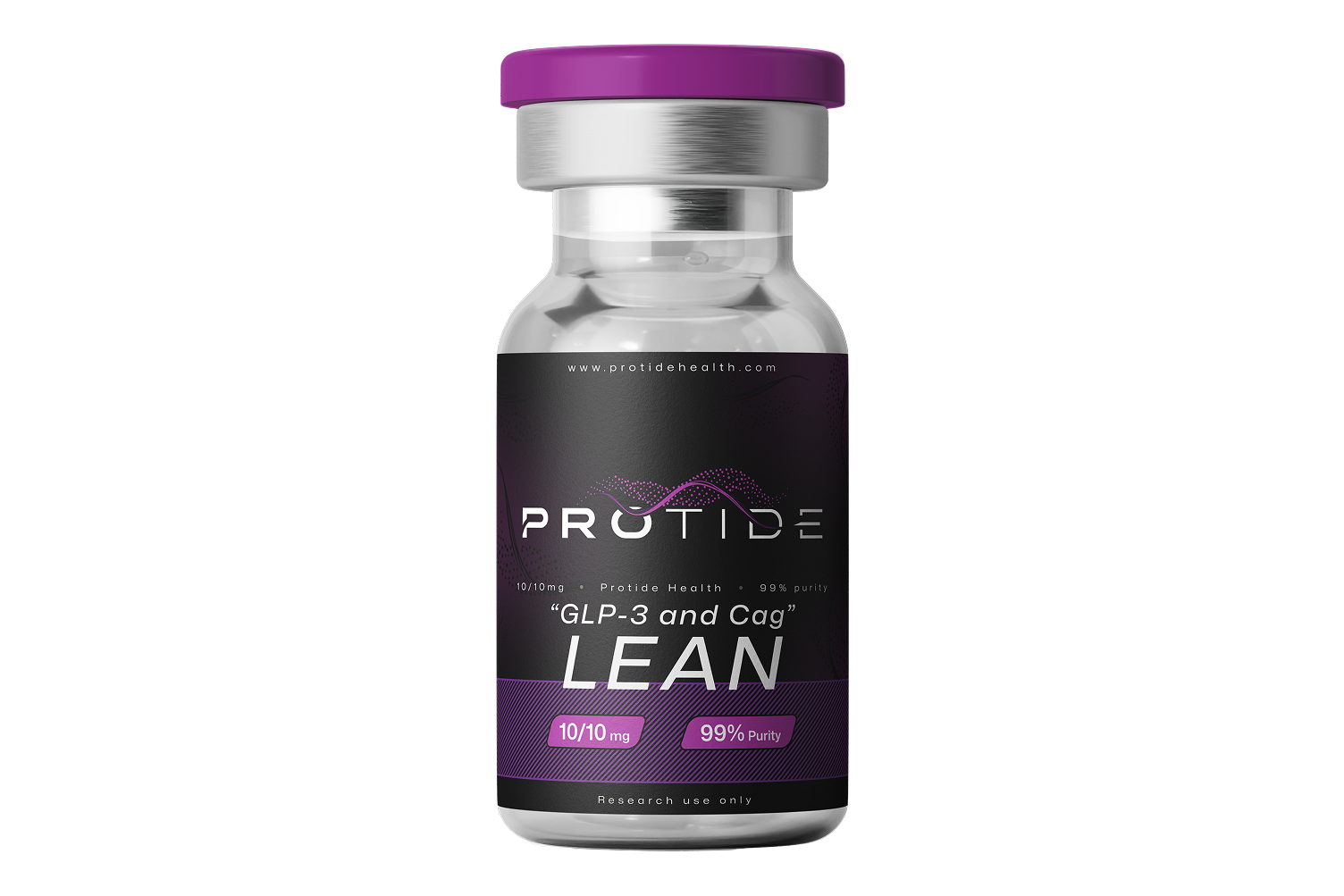
GLP-3 & Cagrilintide “LEAN” Blend (10/10mg)
$295.00
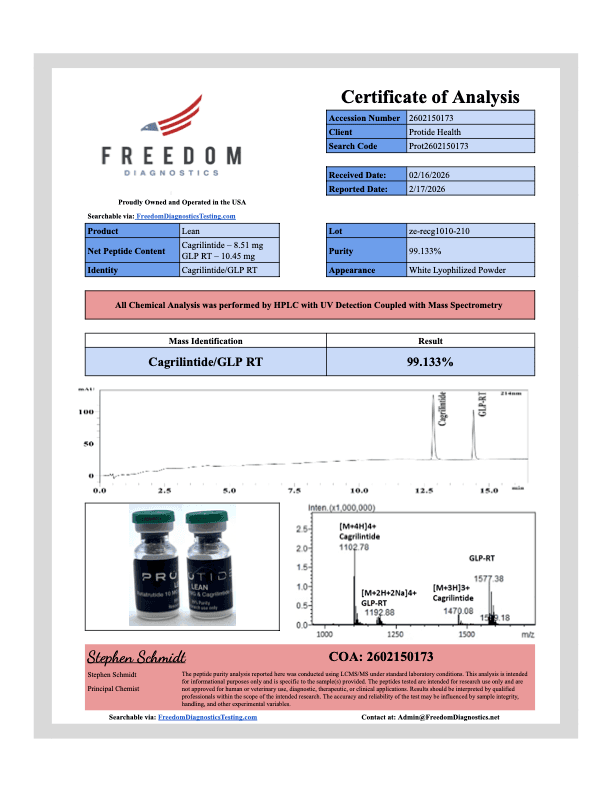
Lean Peptide Blend (10mg GLP-3 and 10mg Cagrilintide) studied in preclinical metabolic signaling and neuroendocrine modulation models. Available in lyophilized vials. Third-party tested, 99% purity. For research use only. Not for human consumption.
Investigating the Lean Peptide Blend (GLP-3 and Cagrilintide)
The Lean Peptide Blend combines GLP-3 10mg and Cagrilintide 10mg for strictly laboratory investigation. Researchers examine this combination in preclinical models to understand its dual-mechanism influence on neuroendocrine signaling and metabolic pathways.
Composition of the Lean Peptide Blend
In vitro studies focus on how these two distinct synthetic peptides interact within cellular environments. The combination allows researchers to evaluate complementary pathways in controlled laboratory settings.
Peptide Components
Researchers evaluate the structural characteristics and isolated receptor interactions of each compound before studying their combined mechanisms.
The blend composition includes:
-
GLP-3 (10mg): A synthetic peptide (approximately 4731 Da) acting as a triple agonist for GLP-1, GIP, and glucagon receptors. Laboratory investigation measures its role in lipid oxidation pathways (PubMed).
-
Cagrilintide (10mg): A long-acting amylin analog (approximately 4409 Da) designed for resistance to enzymatic degradation. Preclinical models evaluate its interaction with glucagon secretion markers (PMC).
GLP-3 Triple Agonist Pathways
Studies investigate the individual receptor interactions of the GLP-3 component within various isolated tissue models:
-
GLP-1 Receptor: Measures glucose-dependent insulin secretion metrics and hypothalamic signaling.
-
GIP Receptor: Evaluates insulin pathway modulation and cellular lipid biomarker concentrations.
-
Glucagon Receptor: Examines lipid oxidation rates and basal metabolic rate metrics (PubMed).
To study this mechanism in isolation, researchers can explore our GLP-3 10mg peptide.
Cagrilintide Amylin Analog Mechanisms
Researchers explore how Cagrilintide modulates secondary metabolic pathways alongside incretin activity:
-
Hypothalamic Amylin Receptors: Measures satiety markers and gastric emptying rates in subject models.
-
Glucose Homeostasis: Evaluates the inhibition of glucagon release and records postprandial glucose metrics (PMC).
Research Applications
The combination of these peptides is studied for its capacity to amplify specific neuroendocrine signals. Researchers utilize this blend to examine complex interactions between reward-based signaling and physiological metabolic pathways.
Metabolic and Appetite Pathway Research
Animal studies examine the combined effects on physiological models to map energy expenditure.
Observations in these models include:
-
Measurements of body weight metrics in obese rodent models (PubMed)
-
Evaluation of amylin-mediated satiety signaling pathways
-
Quantification of incretin-driven energy expenditure markers
Glucose Homeostasis Pathway Evaluation
A primary laboratory investigation focus is the measurement of postprandial glucose fluctuations. The combination of Cagrilintide’s glucagon interaction and GLP-3’s insulinotropic pathways provides a robust model for studying glycemic marker modulation (PubMed).
Lipid Metabolism in Cellular Models
The blend is investigated for its influence on specific lipid profiles. Investigators measure concentrations of triglycerides and VLDL cholesterol to map how triple agonists and amylin analogs alter cardiovascular biomarkers in experimental settings (PubMed).
Researchers can also view the individual Cagrilintide 10mg component or browse our full research peptides shop for targeted investigations.
Conclusion on Lean Peptide Blend Research
In conclusion, the Lean Peptide Blend remains a significant subject of laboratory investigation regarding metabolic and glucose homeostasis pathways. Preclinical models continue to examine the combined triple-receptor agonism of GLP-3 alongside the amylin mechanisms of Cagrilintide.
References
-
Coskun T., et al. Triple hormone receptor agonist (GLP-3) pharmacology. PubMed
-
Enebo 7., et al. Safety, tolerability, and pharmacokinetics of Cagrilintide. PubMed
-
Jastreboff A.M., et al. GLP-3 for obesity: a phase 2 trial. PubMed
-
Rosenstock J., et al. GLP-3 in people with type 2 diabetes. PubMed
-
Sanyal A.J., et al. GLP-3 for metabolic dysfunction-associated steatotic liver disease. PubMed
-
Cagrilintide Amylin Analog Mechanisms. PMC
Legal Disclaimer
The information provided in this description is for research purposes only. The GLP-3 and Cagrilintide peptide blend is not approved by the U.S. Food and Drug Administration (FDA) or any regulatory authority for human consumption or therapeutic use. It is intended solely for investigational use in controlled laboratory settings by qualified researchers. Protide Health does not endorse or promote the use of GLP-3 and Cagrilintide peptide blend in humans or animals outside of approved research protocols. Researchers must comply with all applicable local, state, and federal regulations, including obtaining necessary approvals for experimental use. Consult with regulatory authorities before initiating any research involving GLP-3 and Cagrilintide peptide blend.
Products sold by Protide Health are for laboratory research purposes only and are not intended for human consumption, medical use, or veterinary use.
Be the first to review “GLP-3 & Cagrilintide “LEAN” Blend (10/10mg)”
Related products
Gastrointestinal Research
Metabolic Research
Musculoskeletal Research
Metabolic Research
Cellular Longevity Research
Metabolic Research
Best Selling
Best Selling
Reviews
There are no reviews yet.