

GHK-Cu – Copper Peptide
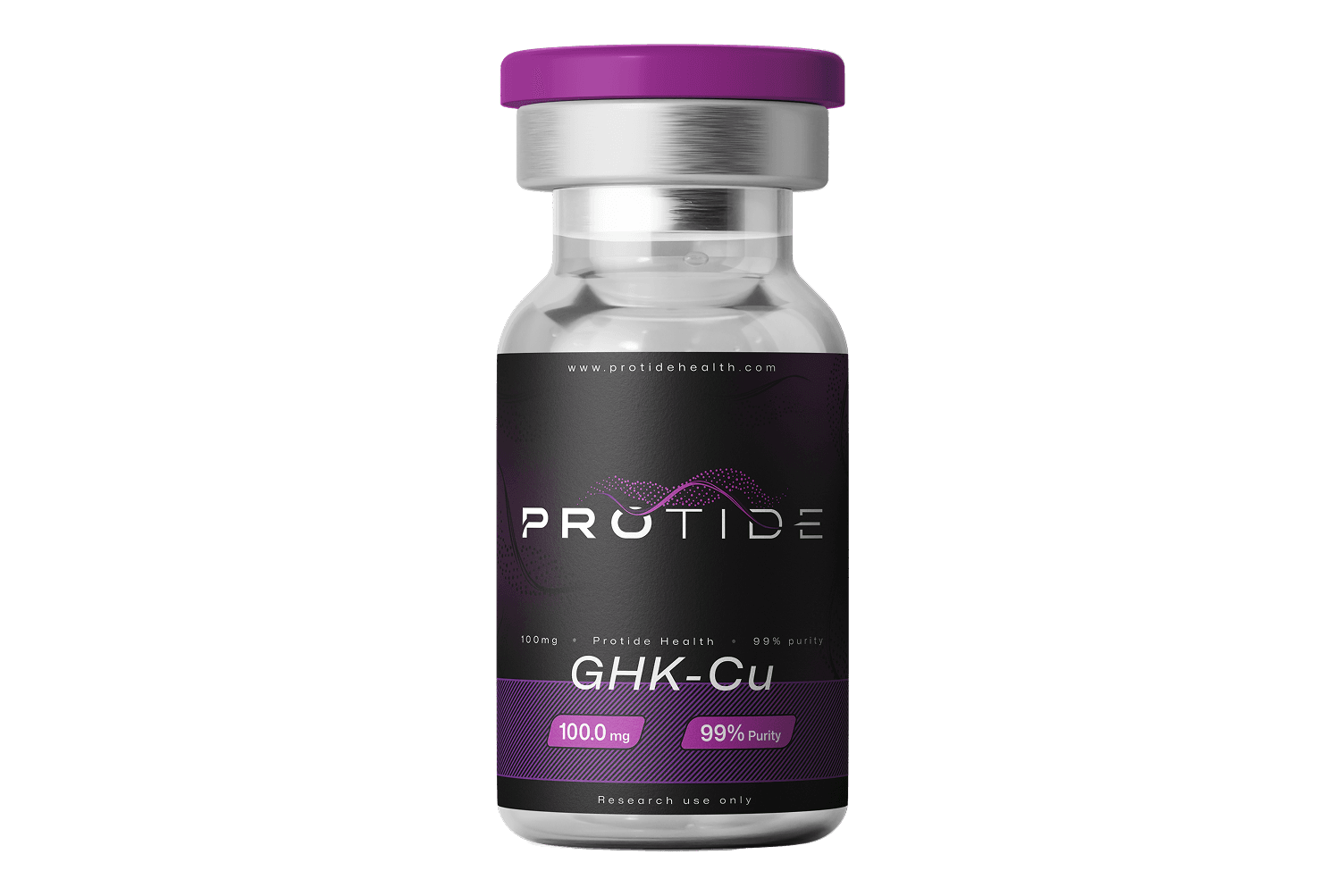
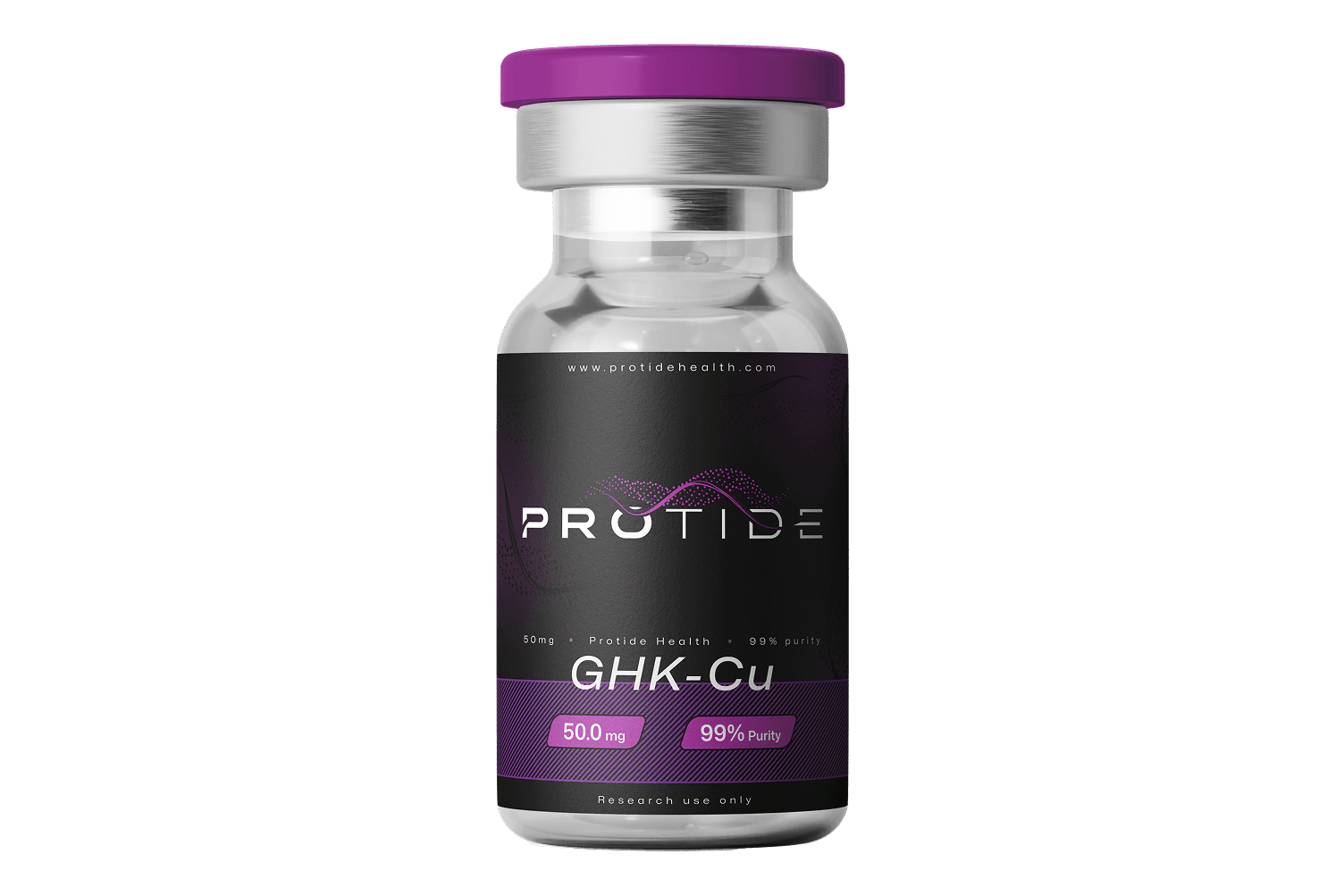
GHK-Cu (copper peptide) is a lab-tested copper-binding tripeptide studied for skin research, collagen synthesis, and cellular aging pathways. Enhances ECM remodeling and angiogenesis in preclinical models. Available in 50mg and 100mg lyophilized vials. Purity >99% verified by third-party HPLC testing. USA domestic fulfillment. For research use only. Not for human consumption.
GHK-Cu Peptide: A Copper-Binding Compound for Laboratory Research
GHK-Cu peptide is a naturally occurring tripeptide complexed with copper(II) ions. Research examines its role in cellular pathways, specifically investigating its influence on extracellular matrix remodeling and cellular senescence.
Specifications and Molecular Mechanisms
GHK-Cu possesses a molecular weight of approximately 340.8 Da when copper-bound. Synthesized strictly for laboratory investigation, it is supplied as a lyophilized powder.
Extracellular Matrix Signaling
Studies investigate the interaction between the peptide and various signaling pathways (PubMed). Preclinical models measure changes in:
-
Collagen and elastin expression in fibroblast cultures
-
Transforming growth factor-beta (TGF-β) signaling cascades
-
Vascular endothelial growth factor (VEGF) modulation
Laboratory Investigation of Copper-Binding Peptides
Researchers across multiple disciplines utilize this compound to examine fundamental biological processes. Animal studies examine its affinity for modulating reactive oxygen species (ROS) and DNA repair mechanisms (PubMed).
Preclinical Models of Tissue Remodeling
In vitro experiments investigate GHK-Cu peptide for its effects on structural proteins. Rodent models measure the following biological markers (PubMed):
-
Fibroblast activation rates in controlled laboratory environments
-
Angiogenesis (new blood vessel formation) markers
-
Expression levels of pro-inflammatory cytokines
Cellular Senescence Research
Laboratory investigation focuses on how this molecule interacts with aging markers in isolated cells. Studies show pathway activation related to SIRT1 and p53 gene expression (PubMed). Human evidence remains highly limited in this area.
Experimental Frameworks and GHK-Cu Peptide Parameters
GHK-Cu peptide applications are confined to controlled laboratory environments. Scientists measure molecular changes using specific assays, with no approved clinical applications existing.
In Vitro and Animal Studies
Typical study designs involve measuring biomarker fluctuations over standard 24 to 72-hour intervals. Preclinical models evaluate (PubMed):
-
Gene expression modulation in neuronal cell cultures
-
Antioxidant enzyme activity in isolated tissue samples
-
Extracellular matrix (ECM) protein deposition rates
Key Takeaways
In summary, GHK-Cu peptide serves as a vital instrument for investigating tissue remodeling, angiogenesis, and senescence pathways in preclinical models. Its investigational status restricts its use entirely to laboratory environments.
References
-
Pickart L, Margolina A. Regenerative and Protective Actions of the GHK-Cu Peptide in the Light of the New Gene Data. Int J Mol Sci. PubMed
-
Pickart L, Vasquez-Soltero JM, Margolina A. The Human Tripeptide GHK-Cu in Prevention of Oxidative Stress and Regenerative Decline of Aging: Implications for Cognitive Health. Oxid Med Cell Longev. PubMed
-
Canapp SO Jr, et al. The effect of a copper-peptide complex on wound healing in a rat model. Vet Surg. PubMed
Legal Disclaimer
The information provided in this description is for research purposes only. The GHK-Cu peptide is not approved by the U.S. Food and Drug Administration (FDA) or any regulatory authority for human consumption or therapeutic use. It is intended solely for investigational use in controlled laboratory settings by qualified researchers. Protide Health does not endorse or promote the use of GHK-Cu peptide in humans or animals outside of approved research protocols. Researchers must comply with all applicable local, state, and federal regulations, including obtaining necessary approvals for experimental use. Consult with regulatory authorities before initiating any research involving GHK-Cu peptide.
Products sold by Protide Health are for laboratory research purposes only and are not intended for human consumption, medical use, or veterinary use.
| Select vial strength: | 100mg, 50mg |
|---|
Be the first to review “GHK-Cu – Copper Peptide”
Related products
Best Selling
Cellular Longevity Research
Cellular Longevity Research
Gastrointestinal Research
Cellular Longevity Research
Cellular Longevity Research
Cellular Longevity Research
Gastrointestinal Research
Reviews
There are no reviews yet.