




Understanding Epithalon in Telomere Research
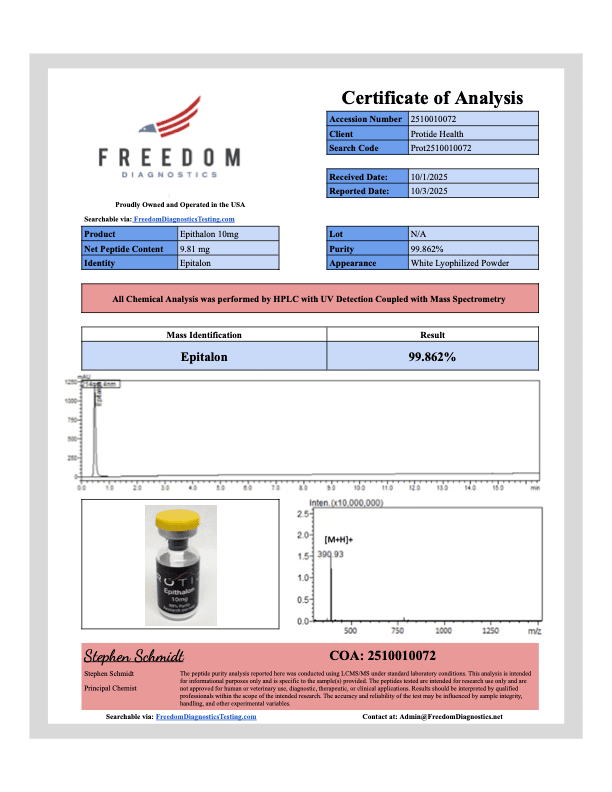
Epithalon is a synthetic tetrapeptide (Ala-Glu-Asp-Gly) frequently utilized in laboratory settings to examine telomere biology and cellular senescence. Derived from epithalamin (a pineal gland extract), this compound serves as a critical instrument for investigating biological mechanisms. Preclinical models commonly utilize this peptide to explore pathways linked to cellular aging and longevity.
Exploring the Mechanisms of Epithalon
Laboratory investigations focus on how this peptide modulates specific enzymatic pathways and cellular responses. Researchers study its interactions within strictly controlled environments to gather data on telomerase expression.
Telomerase Activation Pathways
In vitro studies measure the ability of the peptide to alter telomerase activity in human fibroblast cultures (PubMed). Animal studies examine several specific mechanisms:
-
Upregulation of telomerase enzyme activity during laboratory testing.
-
Alterations in p53 and caspase-3 expression (cellular apoptosis markers).
-
Measurements of reactive oxygen species (ROS) within controlled environments.
Research Applications in Preclinical Models
The primary role of this tetrapeptide centers on the regulation of telomere length and the study of senescence. Scientists use these compounds in animal models to yield data regarding cellular lifespan and neuroendocrine function.
Cellular Senescence Studies
Animal studies measure the compound’s influence on biological markers of aging. Preclinical models observe changes in specific physiological parameters following exposure (PubMed). Research investigates several endpoints:
-
Alterations in senescence-associated β-galactosidase within aged cell cultures.
-
DNA damage markers during cellular division cycles.
-
T-cell proliferation rates in laboratory settings.
Investigators often review other cellular longevity research peptides.
Pineal Gland and Tissue Research
Studies investigate the influence of the peptide on melatonin synthesis and tissue regeneration. Preclinical models measure markers in the pineal gland to track biological changes (PubMed). Research examines:
-
Melatonin production rates in aged rodent pineal glands.
-
Fibroblast proliferation in dermal tissue models.
-
Oxidative stress markers in neuronal cell cultures.
Evaluating Peptide Characteristics
Concluding Thoughts on Epithalon
Epithalon serves as a vital instrument for investigating telomere maintenance and cellular longevity. Preclinical studies continue to examine its influence on telomerase expression, oxidative stress, and circadian rhythm regulation.
References
-
Authors. “Khavinson Peptide Review.” PMC. PubMed
-
Authors. “Epithalon Telomere Research.” PMC. PubMed
-
Authors. “Epithalon Aging Research.” PMC. PubMed
Legal Disclaimer
The information provided in this description is for research purposes only. The Epithalon peptide is not approved by the U.S. Food and Drug Administration (FDA) or any regulatory authority for human consumption or therapeutic use. It is intended solely for investigational use in controlled laboratory settings by qualified researchers. Protide Health does not endorse or promote the use of Epithalon peptide in humans or animals outside of approved research protocols. Researchers must comply with all applicable local, state, and federal regulations, including obtaining necessary approvals for experimental use. Consult with regulatory authorities before initiating any research involving Epithalon peptide.
Products sold by Protide Health are for laboratory research purposes only and are not intended for human consumption, medical use, or veterinary use.
Be the first to review “Epithalon 10mg”
Related products

Cellular Longevity Research


Best Selling

Cellular Longevity Research

Cellular Longevity Research

Best Selling

Cellular Longevity Research

Cellular Longevity Research


Cellular Longevity Research
Cellular Longevity Research Bundle (MOTS-c, Epithalon, Vesugen)
Reviews
There are no reviews yet.